Pierre de Fermat
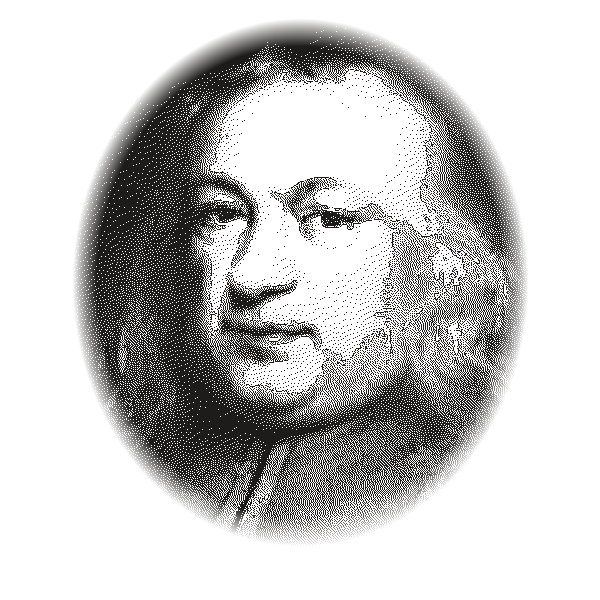
In the quiet provincial city of Toulouse in southern France, during the tumultuous decades of the Thirty Years' War, a high-ranking royal magistrate in the scarlet robes of the Parliament spent his days adjudicating property disputes, executing legal decrees, and condemning heretics to the gallows. By night, in his candlelit study, Pierre de Fermat laid the mathematical foundations of the modern world. He was the ultimate amateur: he never held a university chair, never published a mathematical book under his own name during his lifetime, and fiercely resisted printing his proofs. For Fermat, mathematics was a private intellectual duel, a secret art to be shared only in tantalizing letters dispatched to Marin Mersenne, Blaise Pascal, and René Descartes.
Yet this secretive magistrate held in his hands the double keys to the scientific future: the infinitesimal calculus and modern number theory. In his 1636 treatise Methodus ad disquirendam maximam et minimam, written a decade before Isaac Newton was born, Fermat solved the ancient problem of finding the tangent to a curve and locating its peaks and valleys. He invented the method of 'adequality' (ad-aequalitas), a term borrowed from the Greek geometer Diophantus. To find the maximum or minimum of a mathematical expression, Fermat added a tiny, arbitrary increment $e$ to the variable, equated the two expressions approximately, canceled out the common terms, divided through by $e$, and then boldly set $e$ to zero.
This was the algebraic birth of the derivative: $\lim_{e \to 0} \frac{f(x+e) - f(x)}{e} = 0$. When René Descartes, who considered himself the supreme mathematical monarch of Europe, read Fermat's treatise, he was stung by jealousy and attacked the method as a clumsy heuristic trick. But Fermat defended his method with polite, unshakable clarity. He showed that adequality worked universally on parabolas, hyperbolas, and polynomials, effortlessly finding the tangent lines that Descartes' cumbersome circle-intersection method could barely calculate. Isaac Newton would later acknowledge that his own invention of fluxions was directly inspired by 'Mr. Fermat's way of drawing tangents.'
Fermat did not confine this variational method to abstract geometry. In 1662, meditating on the passage of light across the boundary between air and water, he formulated the principle that marks the beginning of modern theoretical physics: Fermat's Principle of Least Time. René Descartes had attempted to derive Snell's law of refraction by treating light as tiny tennis balls that inexplicably accelerate upon entering a denser medium like water. Fermat rejected this as a physical absurdity. Nature, he declared, is economical: nature always acts by the shortest and easiest path.
Light traveling from a point in the air to a point in the water does not follow the shortest physical path (a straight line); it follows the path that minimizes total travel time. Because light travels slower in dense water than in rare air, the ray bends toward the normal at the boundary, maximizing the distance traveled in the fast medium and minimizing the distance in the slow medium. By applying his mathematical method of maxima and minima to this optical trajectory, Fermat derived Snell's law of refraction ($n_1 \sin\theta_1 = n_2 \sin\theta_2$) with flawless mathematical rigor. For the first time, a fundamental physical law was derived from a variational optimization principle—the conceptual ancestor to Euler-Lagrange mechanics, Hamilton's Principle of Least Action, and Richard Feynman's quantum path integrals.
Yet the domain where his genius achieved mythic status was the pure, solitary kingdom of number theory. While his contemporaries pursued practical geometry and mechanics, Fermat communed with Diophantus of Alexandria, studying the Greek mathematician's Arithmetica in the 1621 Latin translation by Claude Bachet. Fermat saw that while geometry relies on continuous space, whole numbers possess an austere, crystalline, discrete beauty. He formulated Fermat's Little Theorem: for any prime number $p$ and integer $a$, $a^p - a$ is always an exact multiple of $p$—the foundational theorem that today secures all public-key RSA cryptography and global internet encryption.
In the margins of his copy of Diophantus, alongside Problem 8 of Book II—which asked how to divide a square number into two squares, as in the Pythagorean theorem $x^2 + y^2 = z^2$—Fermat scribbled the most celebrated marginal note in the history of human thought: 'On the contrary, it is impossible to separate a cube into two cubes, or a fourth power into two fourth powers, or in general, any power higher than the second, into two like powers. I have discovered a truly marvelous proof of this, which this margin is too narrow to contain.'
With those few lines, Fermat's Last Theorem was born. For 358 years, the equation $x^n + y^n = z^n$ for $n > 2$ taunted the finest intellects of human civilization. Leonhard Euler proved it for cubes; Adrien-Marie Legendre and Johann Dirichlet proved it for fifth powers; Gabriel Lamé and Ernst Kummer invented algebraic ideal numbers in their attempts to crack it. But the general proof remained an unreachable fortress, leading many historians to suspect that Fermat had deceived himself with a flawed proof of infinite descent.
It was not until 1994 that an English mathematician named Andrew Wiles, working in secret for seven years in an attic at Princeton University, finally conquered the theorem, utilizing hundreds of pages of advanced twentieth-century modular forms, elliptic curves, and the Taniyama-Shimura conjecture—mathematical machinery that Fermat could never have dreamed of.
Pierre de Fermat died in Castres in January 1665 at the age of sixty-three, having carried out his judicial duties to the end. He was buried with modest honors, leaving his mathematical manuscripts scattered among loose sheets of paper, scribbled letters, and margin notes.
Today, Pierre de Fermat stands as the architect of mathematical boundaries. His adequality opened the doorway to differential calculus; his principle of least time revealed that the laws of physics are optimization problems; and his marginal riddle propelled the development of modern algebraic geometry. He demonstrated that the highest peaks of mathematical insight do not require institutional power or loud publication, but only a quiet desk, a margins-width of paper, and an intellect capable of gazing directly into the eternal architecture of numbers.
“I have discovered a truly marvelous proof of this, which this margin is too narrow to contain.”
“Nature always acts by the shortest and easiest paths.”
“It is impossible for a cube to be a sum of two cubes, a fourth power to be a sum of two fourth powers, or in general for any power greater than the second to be a sum of two like powers.”
“I have found that it is a great advantage to communicate one's thoughts to someone who can correct them.”
“Mathematics is the queen of the sciences and number theory is the queen of mathematics.”
- Methodus ad disquirendam maximam et minimam (Method for Finding Maxima and Minima) 1636
- De aequationum localium transmutatione (On the Transformation of Local Equations) 1637
- Analyse pour les réfractions (Analysis of Refraction / Principle of Least Time) 1662
- Observations sur Diophante (Annotations in Bachet's Diophantus) 1670 (posthumous)
- Varia Opera Mathematica 1679 (posthumous)