Marie Curie
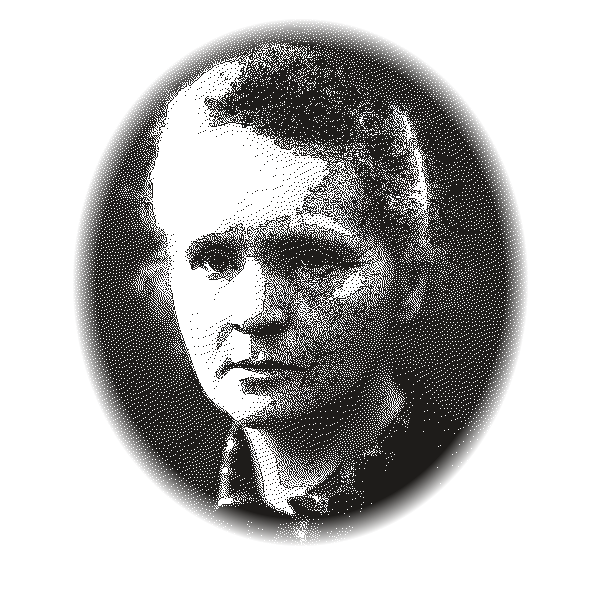
In the bitter winter of 1891, a twenty-four-year-old Polish woman named Maria Skłodowska climbed the wooden stairs to a drafty sixth-floor garret in the Latin Quarter of Paris. She lived on pennies a day: three coal briquettes a night to keep her washbasin from freezing, dining on radishes, dry bread, and hot tea, wrapping herself in all the coats and woolen blankets she owned to study differential calculus until two in the morning. Back in Warsaw, under the suffocating censorship of the Russian imperial police, women were barred from university lecture halls. To learn physics and chemistry, she had attended the secret, underground "Flying University"—an clandestine network of students who met in candlelit private apartments, moving between safe-houses to evade Tsarist arrest. For eight grinding years, she had worked as a governess in the Polish countryside, saving every ruble to fund her elder sister Bronisława’s medical studies in Paris, waiting patiently for her turn to cross Europe. When she arrived at the Sorbonne, she was so malnourished that she fainted on the library steps, yet she passed her physics license first in her class, and her mathematics license second.
In 1894, seeking laboratory space to measure the magnetic properties of tempered steels, she met Pierre Curie, a quiet, brilliant physicist who had already made foundational discoveries in piezoelectricity and crystal symmetry. Their union was not merely romantic; it was an extraordinary intellectual collision. In Pierre, Maria discovered an ascetic mind that shared her contempt for academic politics, material luxury, and personal fame. When they married in Sceaux, they refused a religious ceremony and spent their wedding gift money on two bicycles, touring the roads of Brittany in silent companionship.
In late 1897, having given birth to her first daughter Irène, Marie sought a subject for her doctoral dissertation. A year earlier, Henri Becquerel had discovered that uranium salts spontaneously emitted mysterious rays that penetrated opaque paper and blackened photographic plates without requiring exposure to sunlight. The scientific world had largely ignored the phenomenon as a minor, secondary curiosity compared to Wilhelm Röntgen’s dazzling X-rays. Marie saw in Becquerel’s rays a profound, unexplored frontier.
Using a delicate quartz-piezoelectric electrometer invented by Pierre and his brother Jacques, she began measuring the electrical conductivity of air ionized by uranium rays. Her initial measurements revealed a startling, fundamental regularity: the electrical intensity of the radiation depended strictly upon the quantity of uranium present in the compound. It was completely unaffected by whether the uranium was in solid, powdered, or dissolved form; whether it was heated, chilled, kept in darkness, or subjected to intense chemical reagents.
Here was the foundational leap of her scientific career: radioactivity, she realized, was not a molecular phenomenon produced by chemical reactions or atomic arrangements; it was an atomic property. The mysterious radiation emanated from within the interior of the atom itself. In an age that still regarded the atom as an indivisible, eternal, and immutable billiard ball, Marie Skłodowska-Curie had taken the first step into the subatomic cosmos.
To test whether uranium was unique, she examined every known chemical element, discovering that thorium emitted similar rays. But when she tested natural ores, her electrometer produced an impossible reading: pitchblende, the dense uranium ore from the mines of Bohemia, was four times more radioactive than pure uranium oxide. Because pitchblende’s chemical composition was thoroughly documented, there was only one rational conclusion: the ore must contain minuscule traces of an unknown, vastly more powerful radioactive substance.
Pierre abandoned his own research on crystal dynamics to join her in the hunt. Lacking funding, the Curies were relegated to an abandoned wooden shed on the Rue Lhomond—a former medical dissection room with a dirt-and-bitumen floor, no ventilation, and a cracked glass skylight that leaked rain onto their benches. There, through four years of brutal physical labor, Marie processed over ten tons of pitchblende residue donated by the Austrian government. Working in an unheated room that was an icebox in winter and an oven in summer, she boiled down forty-pound batches of crushed ore in heavy cast-iron cauldrons, stirring the bubbling liquid for hours with an iron rod as tall as herself, choking on acrid sulfurous gases.
Through fractional crystallization across hundreds of porcelain evaporating dishes, the Curies followed the radioactive scent through successive precipitates. In July 1898, they announced the discovery of a new element four hundred times more active than uranium, which Marie named polonium in honor of her partitioned, nonexistent homeland. In December of the same year, they announced an element of terrifying potency: radium, whose radioactivity exceeded that of uranium by more than a million times. By 1902, Marie had succeeded in isolating one-tenth of a gram of pure radium chloride from tons of rock, measuring its atomic weight at 225 and establishing its rightful place in Mendeleev’s periodic table.
In the damp darkness of the shed, the radium salts glowed with a faint, ghostly blue luminescence. Marie loved to walk into the laboratory at night to gaze upon the glowing glass vials resting on the pine tables. "Our precious products," she wrote in her memoir, "for which we had no shelter, were arranged on tables and boards; from all sides we could see their feebly luminous silhouettes, and these gleamings, which seemed suspended in the darkness, stirred us with ever-new emotion and enchantment."
The discovery shattered classical physics. The spontaneous emission of energy without visible source seemed to violate the conservation of energy, until physicists realized that radium was directly converting its own nuclear mass into radiation. Marie Curie had discovered the physical proof that elements are not eternal: atoms could undergo spontaneous, radioactive decay, transmuting from one elemental identity to another.
In 1903, Marie and Pierre shared the Nobel Prize in Physics with Henri Becquerel, making Marie the first woman in history to win a Nobel prize. Eight years later, in 1911, having isolated pure radium metal, she was awarded the Nobel Prize in Chemistry—becoming the first person to win two Nobel Prizes, and remaining to this day the only individual honored across two distinct scientific fields.
Yet the glory was accompanied by deep, shattering grief. In April 1906, while crossing the rain-slicked Rue Dauphine in Paris, Pierre Curie slipped and fell beneath the wheels of a six-ton horse-drawn wagon, his skull crushed in an instant. Widowed at thirty-eight with two young daughters, Marie was shattered, but she refused to retreat. When the Sorbonne offered her Pierre’s vacant academic chair, she accepted, becoming the first female professor in the six-hundred-year history of the university. On November 5, 1906, before an audience packed with students, journalists, and curious socialites, she walked to the podium and began her lecture at the exact sentence where Pierre had concluded his final lecture six months earlier.
When the First World War broke out in 1914, she mobilized science for human preservation. Realizing that military surgeons were operating on wounded soldiers in frontline casualty stations without knowing where shrapnel was lodged, she created the "Petites Curies"—a fleet of twenty mobile radiological ambulances equipped with X-ray apparatus powered by automobile dynamos. She learned to drive, taught herself mechanical auto repair, trained one hundred and fifty female radiology technicians, and drove her ambulances directly to the frontlines of the Marne, Verdun, and the Somme, personally examining over a million wounded soldiers.
The invisible rays she had coaxed out of the earth finally claimed her life. For decades, Marie had handled radioactive vials with her bare fingers, carrying tubes of radium in her apron pockets and absorbing massive doses of ionizing radiation before its biological hazards were known. In July 1934, at a sanatorium in the French Alps, she died of aplastic pernicious anemia, her bone marrow exhausted by a lifetime of radiation exposure. Her laboratory notebooks, personal journals, and cookbooks remain so radioactive today that they are sealed inside lead-lined containers in the Bibliothèque Nationale in Paris, accessible to scholars only upon signing a liability waiver and donning protective suits. Marie Curie passed through the world like the element she discovered: unbending, austere, and self-consuming, illuminating the darkest recesses of matter with a light that refused to go out.
“Nothing in life is to be feared, it is only to be understood. Now is the time to understand more, so that we may fear less.”
“One never notices what has been done; one can only see what remains to be done.”
“I am among those who think that science has great beauty.”
“A scientist in his laboratory is not a mere technician: he is also a child confronting natural phenomena that impress him as though they were fairy tales.”
“We must have perseverance and above all confidence in ourselves. We must believe that we are gifted for something and that this thing must be attained.”
- Sur une substance nouvelle radio-active (Discovery of Polonium) 1898
- Sur une nouvelle substance fortement radio-active (Discovery of Radium) 1898
- Recherches sur les substances radioactives (Doctoral Thesis) 1903
- Traité de radioactivité (2 vols.) 1910
- La Radiologie et la Guerre 1921
- Pierre Curie 1923