Henry Ford
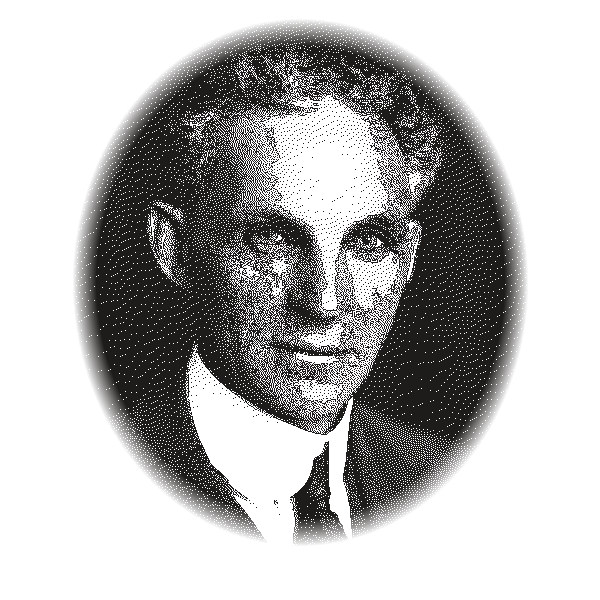
On a wet summer night in June 1896, in a modest brick coal shed behind a rented house on Bagley Avenue in Detroit, a thirty-two-year-old chief engineer of the Edison Illuminating Company completed his first horseless carriage. Built from scrap metal, discarded gas pipe, four bicycle wheels, and an ethanol engine cooled by water jackets, the "Quadricycle" was ready for its maiden road test. Yet as Henry Ford prepared to roll the contraption into the alley, he discovered a humiliating miscalculation: the shed’s wooden doorway was two feet narrower than the vehicle’s wheel track. Without hesitating for a single second, Ford grabbed a heavy sledgehammer, smashed through the brick foundation wall, kicked away the masonry, and drove out into the dark, rain-soaked streets of Detroit.
That violent, pragmatic act contained the essential signature of Henry Ford. He was a mechanical iconoclast who felt nothing but contempt for traditional barriers, conventional accounting, and academic theories. Born on a farm in Greenfield, Michigan, during the American Civil War, he had grown up with a burning hatred for the backbreaking, soul-crushing drudgery of agricultural labor: the endless shoveling of horse manure, the carrying of water pails, and the slow, exhausting pace of draft animals. He was fascinated solely by machinery that multiplied human power. As a boy, he disassembled and repaired every pocket watch in his township using screwdrivers filed from corset stays and knitting needles. At sixteen, he walked eight miles to Detroit to apprentice as a machinist for two dollars and fifty cents a week, enduring starvation wages to learn the secrets of steam engines, metal casting, and electric dynamos.
In the early 1900s, the nascent American automobile industry was an exclusive, aristocratic enclave. Cars were hand-crafted, temperamental luxuries designed for wealthy playboys who raced them along country lanes. When Ford’s early financial backers demanded luxury vehicles with velvet upholstery and massive brass headlamps to maximize profit margins per unit, Ford rebelled. Bankrupt twice, he was ousted by his own investors, who reorganized his company into Cadillac.
Ford refused to surrender his democratic vision. He did not want to build toys for the rich; he wanted to build a universal, indestructible machine for the common American family. In October 1908, operating from his new plant on Piquette Avenue, he unveiled the Model T—the "Tin Lizzie." Engineered from lightweight, ultra-tough vanadium steel alloys that European carmakers used only in high-end racing machines, the Model T was simple, high-riding, and rugged enough to navigate the mud ruts, rocks, and creek beds of rural America where paved roads did not exist. A farmer could repair its four-cylinder engine with a piece of wire and an adjustable wrench, or jack up a rear wheel to power a wood saw. The demand was immediate, ferocious, and insatiable. Within months, orders outstripped the capacity of the factory. Ford realized that the problem was no longer how to sell a car, but how to manufacture an ocean of them.
In 1910, Ford moved operations to a sixty-acre site at Highland Park, Michigan, designed by the industrial architect Albert Kahn. There, in 1913, Ford and his production engineers—Charles Sorensen, C. Harold Wills, and Clarence Avery—orchestrated the most consequential transformation in the history of human manufacture: the moving continuous assembly line.
The inspiration came from an unlikely source: the "disassembly lines" of the Chicago and Cincinnati slaughterhouses, where pig and cattle carcasses hung from overhead moving trolleys, gliding past stationary butchers who each carved away a specific cut of meat. Ford inverted the concept. For centuries, manufacturing had followed the artisan model: craftsmen walked around a stationary product, picking through heaps of unstandardized parts, filing and hammering them until they fit.
Ford declared two foundational principles: "The man must not take more than one step, if possibly it can be avoided; and no man must have to stoop."
Beginning with the flywheel magneto, Ford’s team installed a waist-high moving conveyor driven by an endless chain. The results were staggering: assembly time collapsed from twenty minutes to five. Next came the chassis. Dragged along the factory floor by a motorized rope through a two-hundred-and-fifty-foot line of workers, the assembly time of a complete Model T chassis plummeted from twelve hours and twenty-eight minutes to precisely ninety-three minutes.
By standardizing every interchangeable part to microscopic tolerances, synchronizing sub-assembly feeder lines, and dictating that "any customer can have a car painted any colour that he wants so long as it is black"—because Japan Black was the only enamel that dried rapidly enough to prevent a bottleneck on the conveyor—Ford turned the factory into a gigantic, continuous, single-purpose machine. Production soared from thousands to millions, while the retail price plummeted from eight hundred and fifty dollars in 1908 to two hundred and sixty dollars in 1925.
Yet the terrifying mechanical velocity of the moving line inflicted a catastrophic human cost. Workers were transformed into machine tenders, condemned to repeat a single, monotonous motion—tightening two bolts, inserting a cotter pin—hundreds of times an hour without speaking or pausing. The psychological alienation was so severe that in 1913, Ford faced an annual labor turnover rate of three hundred and seventy percent: to keep fourteen thousand men on the line, the company had to hire fifty-three thousand workers a year.
On January 5, 1914, Ford struck the industrial world like a lightning bolt. He announced the "Five-Dollar Day"—more than doubling the prevailing minimum wage from two dollars and thirty-four cents to five dollars, while reducing the daily shift from nine hours to eight.
Wall Street editorialists denounced Ford as a socialist, a madman, and a traitor to his class, predicting imminent corporate bankruptcy. The exact opposite occurred. Thousands of skilled machinists from across North America besieged Highland Park for jobs, allowing Ford to handpick the most disciplined, capable workforce on the continent. Absenteeism and turnover evaporated overnight, productivity surged, and Ford’s profit margins expanded.
Most profound of all was the macroeconomic revelation embedded in the wage hike: by paying his workers enough money to purchase the very automobiles they were assembling, Ford created the mass consumer base that sustained modern industrial capitalism. He demonstrated that high wages and low prices are not mutually exclusive enemies, but the twin engines of economic abundance.
In the 1920s, Ford pushed the logic of industrial efficiency to its absolute, titanic summit: the River Rouge complex in Dearborn, Michigan. Spanning two thousand acres along the Rouge River, it was the greatest self-contained manufacturing fortress on earth, employing over one hundred thousand workers. It was a monument to total vertical integration: iron ore mined from Ford’s own ranges in Minnesota and timber from Ford’s forests in northern Michigan arrived on Ford-owned steamships; coal from Ford mines was burned in Ford’s electrical power plant; and raw silica sand was poured into continuous plate-glass furnaces. Raw iron ore arriving at the docks on Monday morning was converted into molten iron, cast into engine blocks, machined, assembled, and driven off the final line as a completed automobile by Tuesday afternoon—a manufacturing transit time of just twenty-eight hours.
Yet the colossus was haunted by dark, tragic contradictions. Ford grew increasingly paranoid, rigid, and reactionary with age. He created the invasive Ford Sociological Department to spy on workers' private home lives, alcohol consumption, and marital fidelity; published venomous anti-Semitic conspiracies in his weekly newspaper, The Dearborn Independent; and unleashed a violent internal security force under Harry Bennett that brutally assaulted union organizers during the Battle of the Overpass in 1937. He stubbornly refused to modernize the Model T for nearly two decades, nearly bankrupting the company as Alfred Sloan’s General Motors outflanked him with styling, color choices, and annual model changes.
When Henry Ford died of a cerebral hemorrhage in April 1947 at his estate in Fair Lane, the electrical power in Detroit was knocked out by a local river flood; the father of the modern electrical assembly line died by the flickering light of kerosene lamps and wax candles, like the agrarian ancestors he had spent his life escaping. Yet the world he left behind was unrecognizable from the one into which he was born. Henry Ford had dismantled the quiet, static rhythms of the nineteenth century and installed in their place the continuous, synchronized, and unstoppable conveyor-belt velocity of the modern world.
“Whether you think you can, or you think you can't—you're right.”
“Any customer can have a car painted any colour that he wants so long as it is black.”
“Coming together is a beginning, staying together is progress, and working together is success.”
“There is one rule for the industrialist and that is: Make the best quality of goods possible at the lowest cost possible, paying the highest wages possible.”
“Don't find fault, find a remedy; anybody can complain.”
- The Model T Production Architecture (Highland Park) 1913
- Announcement of the Five-Dollar Day Minimum Wage 1914
- My Life and Work (with Samuel Crowther) 1922
- Today and Tomorrow (with Samuel Crowther) 1926
- Moving Forward (with Samuel Crowther) 1930