Herodotus of Halicarnassus
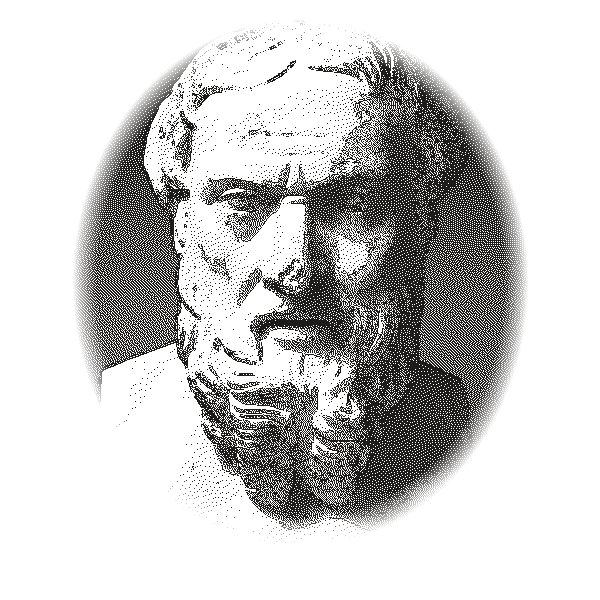
In the bustling Aegean port of Halicarnassus in the fifth century BC, on the contested boundary where the Persian Empire pressed against the Greek Mediterranean, a traveler with a notebook stepped onto a merchant galley and did something no human being had ever done before. He did not recite ancestral genealogies tracing his lineage back to Apollo or Heracles; he did not attribute the bloody clashes of nations to the squabbles of immortal gods feasting on Olympus; he did not carve flattering dynastic propaganda onto royal stone stelae at the decree of an absolute king. Herodotus began an inquiry—a historia. In the opening sentence of his nine books, he laid down the charter of secular memory: 'This is the display of the inquiry of Herodotus of Halicarnassus, so that things done by man not be forgotten in time, and that great and marvelous deeds, some displayed by Greeks, some by barbarians, may not lose their renown; and especially what was the reason why they fought one another.'
With that single phrase, history was liberated from myth. Before Herodotus, memory was the province of Homeric bards chanting poetic epics of divine wrath, or Egyptian temple priests recording astronomical calendars and royal tributes. Herodotus made human action its own autonomous subject. He asked a historical question: aitia—what was the cause? Why did the greatest empire the ancient world had ever seen, stretching from the Indus River to the Aegean Sea, mobilize millions of men, bridge the Hellespont with ships, and invade the fragmented, bickering city-states of Greece?
To answer that question, Herodotus did not rely on hearsay from a single palace court. He became the first investigative field researcher. He traveled across the known world: south along the Nile to the First Cataract at Elephantine, east to Babylon and the Persian Royal Road, north to the wind-swept steppes of Scythia along the Black Sea, and west to the Greek colonies of southern Italy. His methodology was founded upon three explicit criteria: autopsia (eyewitness seeing with one's own eyes), gnome (critical rational judgment), and historie (cross-examination of local witnesses).
Where conflicting accounts existed, Herodotus did not invent a convenient consensus. He recorded the contradictions with clinical ethnographic balance: 'My duty is to report all that is said, but I am not obliged to believe it all alike.' When Persian priests claimed the Nile flooded in summer due to melting snows, Herodotus used geography to dispute them, arguing that snow could not fall in lands where the inhabitants were blackened by the sun. When Greeks dismissed all foreigners as uncivilized 'barbarians,' Herodotus chronicled the ancient antiquity of Egypt—noting that Greece was an infant compared to the civilization that raised the pyramids—and reported the sophisticated postal courier system and administrative tolerance of the Persian kings.
In doing so, he formulated the earliest principles of cultural anthropology and cultural relativism. He told the celebrated parable of the Persian King Darius, who summoned Greeks to his court and asked what price would induce them to eat the bodies of their deceased fathers; the Greeks wept in horror, declaring that no amount of gold could tempt them to commit such an atrocity. Darius then summoned members of the Callatian tribe from India, who customarily ate their dead parents, and asked what price would induce them to burn their fathers on a pyre, as the Greeks did; the Callatians screamed in agony, begging the king not to utter such blasphemy. Herodotus concluded with the words of Pindar: 'Custom (Nomos) is the king of all.'
Yet behind the rich ethnographic digressions on Scythian burial customs, Babylonian marriage markets, and Egyptian mummification techniques lay an overarching political thesis: the conflict between autocracy and freedom. Herodotus showed that the Persian Empire, despite its immense wealth, discipline, and territorial expanse, was paralyzed by the pathology of despotism. In Persia, one man alone was free; all others, from grand viziers to common soldiers, were slaves (douloi) whose lives hung on the mood of the Great King. At the Battle of Thermopylae and the naval strait of Salamis, by contrast, the Greeks fought not under the lash of a royal master, but under the law (nomos) of civic autonomy. As the exiled Spartan King Demaratus told Xerxes: 'They are free, yet not wholly free; for law is their master, whom they fear far more than your men fear you.'
For over two millennia, critics attacked Herodotus with fierce condescension. Thucydides, writing a generation later, subtly mocked Herodotus's conversational style as a romantic competition prize meant for momentary listening rather than an eternal possession. Plutarch wrote an entire vitriolic treatise titled On the Malice of Herodotus, accusing him of pro-barbarian bias because he dared to praise the Persians and criticized Greek cowardice. In the Renaissance and Enlightenment, he was frequently dismissed as 'the Father of Lies,' a gullible teller of tall tales who believed in gold-digging ants and flying serpents.
Yet modern archaeology, anthropology, and linguistic epigraphy have achieved a stunning, continuous vindication of Herodotus. In the nineteenth and twentieth centuries, excavations of Scythian royal kurgans (burial mounds) revealed the exact golden horse armor, hemp-smoking braziers, and sacrificed concubines that Herodotus had described with photographic accuracy. Decipherment of Persian cuneiform inscriptions at Behistun confirmed his accounts of Darius's accession to the throne. His reports of gold-digging ants were traced by French ethnologists to Himalayan marmots in Ladakh that unearth gold-bearing sand when burrowing.
Herodotus died around 425 BC, likely in the Panhellenic colony of Thurii in southern Italy, leaving his sweeping masterpiece divided by Alexandrian scholars into nine books named after the nine Muses.
Today, Herodotus stands at the source of all human documentary literature: the Father of History. He taught civilization that the past does not belong to rulers, gods, or propagandists; it belongs to the critical, inquiring human eye. He proved that to understand oneself, one must cross the border and listen with empathy to the strange customs of the stranger, transforming the vast, chaotic spectacle of human conflict into an enduring monument of understanding.
“This is the display of the inquiry of Herodotus of Halicarnassus, so that things done by man not be forgotten in time.”
“Circumstances rule men; men do not rule circumstances.”
“In peace, sons bury their fathers. In war, fathers bury their sons.”
“Very few things happen at the right time, and the rest do not happen at all: the conscientious historian will correct these defects.”
“Custom is king of all.”
- The Histories: Book I (Clio - The Rise of Persia and Fall of Croesus) c. 430 BC
- The Histories: Book II (Euterpe - Customs and Antiquities of Egypt) c. 430 BC
- The Histories: Book IV (Melpomene - Scythia and the Steppes) c. 430 BC
- The Histories: Book VII (Polymnia - Xerxes and Thermopylae) c. 425 BC
- The Histories: Book VIII (Urania - The Naval Battle of Salamis) c. 425 BC