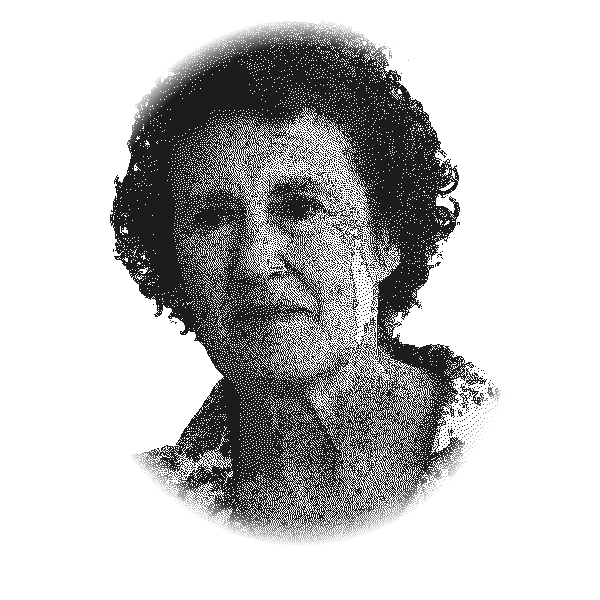
Barbara Liskov
In the early 1970s, computer science believed it had solved the software crisis through Structured Programming. Edsger Dijkstra had demonstrated how to tame control flow: unconditional jumps were banished, algorithms were decomposed into nested loops and conditionals, and the execution flow of a program was forced to mirror its printed text on the page. Yet despite this triumph, software systems continued to collapse under their own weight. Programs that functioned flawlessly during localized tests disintegrated into catastrophic bugs the moment they were scaled up or maintained by teams.
Barbara Liskov, one of the earliest women to earn a doctorate in computer science in the United States, saw that Dijkstra’s revolution had addressed only half of the problem. Control flow had been disciplined, but data remained completely wild. In languages like FORTRAN, C, and Pascal, data structures were naked memory layouts. An array, a linked record, or a hash bucket was an exposed patch of bytes sitting in physical memory. Any function across an entire codebase could dereference a pointer, reach into the interior of an aggregate structure, and mutate its fields directly.
A software system was like a skyscraper built with clean, orderly hallways, but with interior walls made of translucent paper. If an engineer decided to alter the internal representation of an employee record—expanding an address field from sixteen bytes to thirty-two—every subroutine across thousands of lines of code that performed manual offset arithmetic had to be located, rewritten, and debugged. Programmers lived in terror of changing their representations. Data was fragile, porous, and ungoverned.
In 1974, as a newly appointed professor at MIT, Liskov delivered the intellectual pivot that permanently stabilized software engineering. Collaborating with Stephen Zilles, she published Programming with Abstract Data Types.
Her insight was deceptively simple, yet it inverted the prevailing ontological foundation of programming: data must never be defined by what it is, but exclusively by what it does.
Until Liskov, programmers asked: How is this data structure laid out in memory? Liskov insisted that this was the wrong question. A data type is not a spatial arrangement of bytes; it is a mathematical behavior. A stack is not an array paired with an integer index pointer; a stack is an abstract algebraic contract that guarantees that whatever element is added last via push will be retrieved first via pop. Whether the stack is physically implemented as an array, a linked list, or an inverted memory segment is an operational detail that is nobody else's business.
Liskov formalized the concept of the Abstract Data Type (ADT). She demanded that an internal representation be sealed behind an impermeable conceptual membrane: encapsulation. The outside world was forbidden from touching the internal fields directly. A consumer of the data could interact with it solely through a public protocol of designated operations.
By erecting this wall of abstraction, Liskov achieved what hardware designers took for granted: modularity. An engineer could completely tear out the underlying storage mechanism of a data type—switching from a linear array to a balanced binary tree to boost performance—and so long as the external operational contract was preserved, not a single line of client code across the entire universe of the program would break.
To prove that abstract data types were not merely an academic mathematical ideal, Liskov spent the mid-1970s building the language that embodied her philosophy: CLU.
CLU was a triumph of engineering foresight. Decades before the mainstream software industry adopted C++, Java, or Python, CLU introduced the modern architecture of programming languages. It invented the cluster—the direct architectural ancestor of the modern class and module. It introduced parameterized types (generics), allowing programmers to define containers like set[T] or list[T] without sacrificing compile-time type safety. It invented the iterator and the yield statement, allowing programs to traverse complex collections without exposing their internal memory representations. And it pioneered structured exception handling (signal and except), transforming runtime failure recovery from an unpredictable crash into a verifiable control flow contract.
Yet Liskov’s most celebrated contribution to the philosophy of software arrived in 1987, during an invited keynote address at the OOPSLA conference in Orlando, Florida.
The computing industry was then succumbing to a dangerous new dogma: Object-Oriented Programming. Marketers and engineers heralded class inheritance as a silver bullet, encouraging programmers to create deep taxonomies of subclasses that inherited methods from parent classes. But in practice, inheritance was breeding subtle, untraceable bugs. A programmer would create a subclass that nominally inherited from a parent, but then override a method in a way that violated the parent’s implicit assumptions—such as making a ReadOnlyFile subclass of File, which crashed whenever an existing routine attempted to write to it.
Liskov stepped to the podium and codified the fundamental law of subtyping, known ever since as the Liskov Substitution Principle (LSP):
If for each object $o_1$ of type $S$ there is an object $o_2$ of type $T$ such that for all programs $P$ defined in terms of $T$, the behavior of $P$ is unchanged when $o_1$ is substituted for $o_2$, then $S$ is a subtype of $T$.
Subtyping, Liskov declared, is not a matter of matching method signatures or saving a few lines of code through inheritance. It is a strict contract of behavioral preservation. A subtype must never demand more from a caller than its parent, and it must never deliver less. It must preserve all invariants, pre-conditions, and post-conditions of the abstraction it replaces. By providing this rigorous mathematical definition, Liskov saved object-oriented programming from collapsing into semantic incoherence, establishing the "L" in the foundational SOLID principles of modern software architecture.
In the decades that followed, Liskov turned her architectural genius toward distributed computing. Long before the global internet relied on cloud computing clusters, she designed the Argus distributed programming language and, with Brian Oki in 1988, formulated Viewstamped Replication—one of the earliest algorithms for distributed consensus in the presence of network partitions and node crashes, anticipating the core principles of Paxos.
In 2008, the Association for Computing Machinery awarded Barbara Liskov the A.M. Turing Award, recognizing her foundational contributions to programming languages, system design, and the practical theory of data abstraction.
Barbara Liskov recognized a profound truth about human nature: the human intellect cannot hold a million moving parts in its head simultaneously. We cannot build massive, reliable, interconnected software systems by being smarter, more heroic, or working longer hours. The only way humanity can build cathedral-scale machines is through rigorous, impenetrable boundaries—by knowing how to hide what is contingent, how to enforce behavioral promises, and how to create self-contained modules that can be trusted implicitly from the outside.
By teaching the world that software is an architecture of contracts rather than an arrangement of bytes, Barbara Liskov gave computer science the intellectual scaffolding that allows modern civilization to stand.
“Modularity based on abstraction is the way things get done.”
“Data abstraction is about what operations can do, not how data is represented.”
“Subtype requirements: If it looks like a duck and quacks like a duck, but it needs batteries, you probably have the wrong abstraction.”
“You have to be willing to throw away ideas that don't work, and you have to be willing to be wrong.”
“Good design is not about making things complex; it is about making complex things behave predictably.”
- Programming with Abstract Data Types (with Stephen Zilles) 1974
- Abstraction Mechanisms in CLU 1977
- CLU Reference Manual 1979
- Data Abstraction and Hierarchy (OOPSLA Keynote / LSP) 1987
- Viewstamped Replication (with Brian Oki) 1988
- A Behavioral Notion of Subtyping (with Jeannette Wing) 1994