Augustine of Hippo
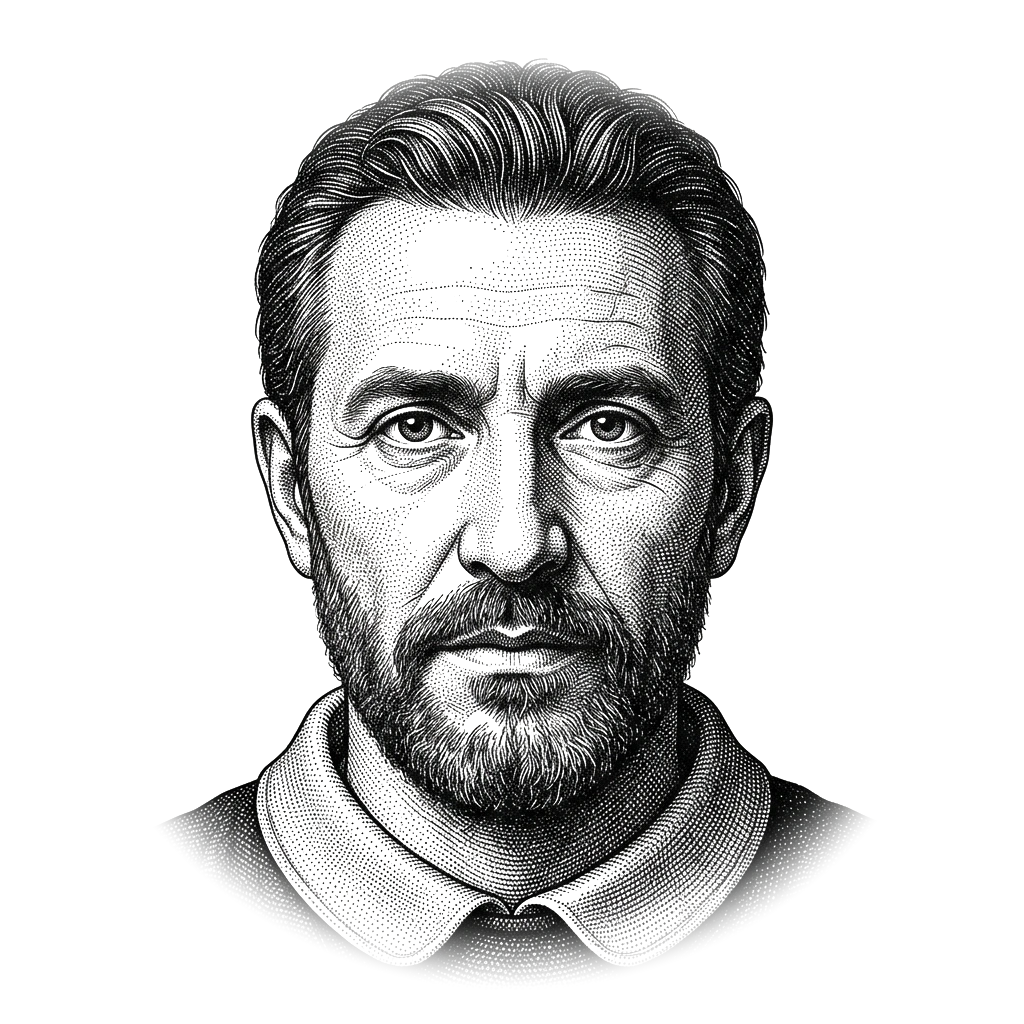
In the late summer of 386, in a secluded garden in Milan, an exhausted thirty-one-year-old rhetorician from Roman North Africa collapsed beneath a fig tree in tears, trapped in the agony of a divided will. Aurelius Augustinus had climbed to the summit of the imperial civil service, celebrated as the official orator of the Western Roman court, yet his interior life was shattered by the irreconcilable friction between his soaring philosophical aspirations and his intractable habits. As he wept, asking how long he would postpone his conversion to the morrow, he heard from across a garden wall the singsong voice of a child repeating a phrase in a game: Tolle, lege; tolle, lege—take up and read, take up and read. Opening the Codex of Paul's epistles at random, his eyes fastened on Romans: "Not in rioting and drunkenness, not in chambering and wantonness, not in strife and envying; but put ye on the Lord Jesus Christ." At the close of that single sentence, the storm inside his chest collapsed into serene certainty.
With that garden breakthrough, Augustine inaugurated the Western tradition of autobiographical interiority. His Confessions (Confessiones), composed a decade later as Bishop of Hippo Regius, was not an apology or a defense, but an unprecedented experiment: an address to an omnipresent God conducted in the hearing of humanity, turning the spotlight of philosophical scrutiny inward toward the labyrinth of the self. Before Augustine, classical antiquity had mapped the cosmic city, the virtues of the statesman, and the geometric logic of the spheres; Augustine mapped the abyss of human memory (memoria), the fragmented flow of subjective time, and the tragic duality of a will capable of knowing the good while actively willing its own destruction. In his recollection of stealing green pears from an orchard as an adolescent—not to eat them, for they were sour, but purely for the delight of theft itself—he exposed the irrational, abyssal perversity of human sin.
Augustine's intellectual journey was a relentless pursuit of the origin of evil. Reared in Tagaste by a pagan father and an intensely devout Christian mother, Monica, he had early been repelled by the rustic Latin of the Old Testament and seduced by Cicero's Hortensius into the love of wisdom. For nearly a decade, he embraced Manichaean dualism, which offered a comforting cosmic explanation: light and darkness, good and evil, are two co-eternal, warring substances, meaning that man's sins are not committed by himself, but by an alien darkness trapped within his flesh. Disillusioned by the intellectual vacuity of Manichaean leaders, he drifted into skeptical despair in Rome, until he encountered the sermons of Bishop Ambrose in Milan and the "books of the Platonists" translated by Marius Victorinus.
Plotinian Neoplatonism provided Augustine with his decisive metaphysical breakthrough: evil is not a substance (substantia), but a privation of the good (privatio boni). Just as darkness is merely the absence of light and blindness the defect of sight, evil possesses no independent ontological reality; it is the parasitic corruption of a good creation, brought about by the disordered turning of a free will away from the supreme, immutable Good toward mutable, lesser goods. God had created a universe that was entirely good, but human pride (superbia) disrupted the hierarchy of love. From this realization came Augustine's famous definition of virtue: ordo amoris, the rightly ordered economy of love, wherein things are loved in exact proportion to their true intrinsic worth.
As the Bishop of Hippo for thirty-five years, overseeing a turbulent diocese on the rim of the Mediterranean, Augustine became the chief theological architect of Latin Christendom through three exhausting controversies. Against the Donatists, who insisted that the sacraments of bishops who had compromised during Roman persecutions were invalid, Augustine established the objective efficacy of the sacraments (ex opere operato): the priest is merely a minister, while Christ himself is the true celebrant, ensuring that human unworthiness cannot nullify divine grace. Against the British monk Pelagius, who asserted that human beings possess the natural moral capacity to achieve perfection and obey God's commands without supernatural assistance, Augustine mounted a relentless defense of radical grace.
In Augustine's anti-Pelagian theology, human nature had been fundamentally crippled by the Fall of Adam. The human will was not neutral, standing at an equilibrium between good and evil; it was afflicted by concupiscence (concupiscentia), an involuntary tilt toward self-idolatry that made it impossible for man to will the supreme good without the unmerited, prevenient gift of divine grace (gratia praeveniens). To love God requires an infusion of charity that human nature cannot generate from its own resources. While this doctrine preserved the absolute sovereignty of God and the necessity of redemption, its late, polemical expressions on unconditional predestination and the massa damnata cast a somber shadow that would haunt Western theology from the Protestant Reformation to Jansenism.
In 410, when the Visigoths under Alaric sacked Rome, sending shockwaves through an empire that had considered itself eternal, pagan intellectuals blamed the catastrophe on the abandonment of the ancestral gods for Christianity. Augustine spent thirteen years writing his masterwork, De Civitate Dei (The City of God), delivering the first profound theology of history. He dismantled the myth of Roman imperial greatness, exposing the empire's foundational violence—from Romulus murdering Remus to the plunder of the Mediterranean—as a vast criminal syndicate (remota iustitia quid sunt regna nisi magna latrocinia?).
In place of imperial destiny, Augustine posited two mystical societies interwoven throughout human history until the final judgment: the City of Man (Civitas Terrena), built on the love of self to the contempt of God, and the City of God (Civitas Dei), built on the love of God to the contempt of self. Earthly states, laws, and peace are not divine ends in themselves, but fragile, temporary instruments designed to restrain violence and maintain temporal order (tranquillitas ordinis) so that citizens of the heavenly city may make their pilgrimage through time. By stripping the secular state of sacred pretensions, Augustine planted the seed for Western separation of church and state, warning against every messianic political ideology that promises heaven on earth.
In 430, as the Vandal horde laid siege to Hippo, cutting off food and water to the coastal city, the seventy-five-year-old bishop lay dying in his episcopal quarters. He asked his disciples to write out the penitential Psalms of David on large sheets of parchment and hang them on the whitewashed walls of his bedchamber. There, in solitude and silence, gazing upon the words of contrition, Augustine wept and prayed until he breathed his last on the twenty-eighth of August. He left no will, for he owned nothing; his only property was his library of manuscripts, which survived the fire that razed the city.
Augustine stands as the bridge across the chasm between the Classical antiquity of Cicero and Virgil and the medieval Christian commonwealth. His psychology of memory, his analysis of time as an internal distension of the human soul (distentio animi), his wrestling with original alienation, and his insistence that "our heart is restless until it rests in Thee" (inquietum est cor nostrum, donec requiescat in te) established the existential grammar of modern consciousness. Long after Rome fell and the Vandals were forgotten, Augustine's interior voice remained, echoing down the centuries as the archetype of the restless mind pursuing the eternal light.
“Thou hast made us for Thyself, and our heart is restless until it rests in Thee.”
“Justice being taken away, then, what are kingdoms but great robberies?”
“What then is time? If no one asks me, I know; if I wish to explain it to one that asketh, I know not.”
“Love, and do what you will.”
“The mind commands the body and it obeys instantly; the mind commands itself and meets resistance.”
- Confessiones 397–400
- De Civitate Dei 413–426
- De Trinitate 399–420
- De Doctrina Christiana 396–426
- De Libero Arbitrio 388–395