Abu Hamid Al-Ghazali
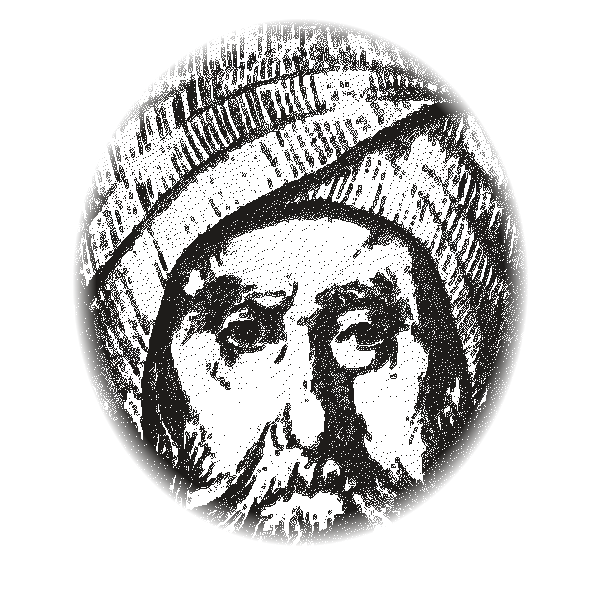
In the autumn of 1095, at the absolute pinnacle of his intellectual fame, Abu Hamid Muhammad ibn Muhammad al-Ghazali suddenly lost the power of speech. As the chief professor of the Nizamiyya Madrasa in Baghdad—the most prestigious chair of Islamic jurisprudence and theology in the Abbasid Empire—his lectures drew hundreds of scholars, jurists, and grandees. Yet beneath the glittering public veneration, an acute epistemological crisis had seized him. He had mastered every reigning system of his era: scholastic theology (Kalam), the Hellenistic philosophy of Avicenna and Al-Farabi (Falsafa), the esoteric authoritarianism of the Isma'ili Ta'limites, and the interior practices of the Sufi mystics. When he examined his conscience, he realized that his teaching was animated not by sincere devotion to truth, but by a craving for prestige and public applause. When he attempted to deliver his morning lecture, his tongue physically froze in his mouth; his digestion failed, and physicians declared his heart broken beyond medical remedy.
Recognizing that his paralysis was not a physical ailment but a crisis of the soul, Ghazali executed a clean rupture. Abandoning his professorship, distributing his vast fortune except for what was required to support his family, and donning the coarse woolen robe of a wandering dervish, he slipped out of Baghdad in the disguise of an obscure mendicant. For eleven years, he lived in voluntary exile, sweeping the stone courtyards of the Umayyad Mosque in Damascus, secluding himself in the minaret of Saint John the Baptist, praying at the Dome of the Rock in Jerusalem, and performing the pilgrimage to Mecca and Medina. In that prolonged silence, away from academic rivalry and political courtiers, Ghazali sought what he called dhawq—direct, experiential "tasting" of spiritual reality, which alone could heal the sickness of intellectual skepticism.
Ghazali's philosophical radicalism was forged in his early work Tahafut al-Falasifa (The Incoherence of the Philosophers), written just before his departure from Baghdad. Armed with a dialectical razor as sharp as any in the history of thought, Ghazali turned Greek logic against the Hellenizing Islamic philosophers (falasifa). He systematically demonstrated that while the philosophers were rigorous in mathematics and formal syllogisms, their metaphysical claims—such as the eternity of the world, the denial of God's knowledge of particulars, and the impossibility of bodily resurrection—were ungrounded speculations disguised as scientific demonstrations. In doing so, he anticipated David Hume by seven centuries in dismantling the necessary connection between cause and effect.
Cotton placed in fire does not burn by an inherent metaphysical necessity in the fire, Ghazali argued; rather, observation reveals only that the burning occurs alongside the contact ('inda), not through it (bi). The connection is habitual, not logically necessary: God creates the burning at the moment of contact, and He is equally capable of preserving the cotton unburnt, as in the Quranic miracle of Abraham. By stripping nature of autonomous necessity and vesting all causal efficacy in the divine will (occasionalism), Ghazali sought to liberate the transcendent mystery of God from the mechanistic determinism of Aristotelian cosmology, defending the radical contingency of created existence.
Yet Ghazali was far from an anti-rational fundamentalist. In his epistemological treatise Al-Qistas al-Mustaqim (The Correct Balance) and his handbook on logic Mi'yar al-'Ilm, he defended Aristotelian formal logic with such rigor that he permanently naturalized syllogistic reasoning into Islamic orthodox jurisprudence and theology. He insisted that anyone who rejects logical demonstration in the name of piety damages religion far more than its sworn enemies, because an intelligent seeker who sees religion tethered to demonstrable absurdities will abandon religion altogether. Logic was not a pagan impiety; it was a neutral, universal scale of human measurement.
His monumental life's work was the Ihya' 'Ulum al-Din (The Revival of the Religious Sciences), a forty-volume masterwork composed during his years of wandering and retirement. In the Ihya', Ghazali accomplished a historic reconciliation: he synthesized the external, formal jurisprudence of the sharia with the interior, psychological depth of Sufi mysticism. He argued that legal rituals—prayer, fasting, almsgiving, pilgrimage—are mere empty shells if stripped of interior presence (hudur al-qalb), while mystical raptures without moral and legal discipline degenerate into antinomian chaos. By demonstrating that Sufism was the inner heart of orthodox practice, he rescued mysticism from ecclesiastical persecution and infused dry scholasticism with living spiritual warmth.
In his intellectual autobiography, Al-Munqidh min al-Dalal (The Deliverance from Error), composed toward the end of his life, Ghazali recounted his method of systematic doubt. Long before René Descartes retreated by his stove in Holland, Ghazali had subjected sensory perception and rational self-evident propositions to relentless skepticism: just as dreams appear vivid and unquestioned until one wakes, might not rational waking reality be superseded by a higher state of consciousness? Reason, Ghazali concluded, is an indispensable instrument that takes the seeker to the threshold of reality, but it cannot open the final door. What reason cannot reach must be supplied by the light of direct intuition (nur ilahi), cast into the breast by divine grace.
Returning briefly to teaching at the Nizamiyya in Nishapur at the urgent insistence of the Seljuk vizier, Ghazali was no longer the vain disputant of Baghdad. He taught as an elder physician of souls, counseling disciples on the diagnosis of pride, envy, and spiritual sloth. He established a modest madrasa and Sufi retreat (khanqah) in his native Tus, where he devoted his final years to communal prayer, the study of prophetic traditions, and the guidance of sincere seekers.
On the morning of the nineteenth of December 1111, at the age of fifty-three, Ghazali rose before dawn, performed his ablutions, and offered the morning prayer. He asked his brother Ahmad to bring his shroud; he kissed it, laid it across his eyes, and said, "I hear and obey the summons to enter into the presence of the King." He stretched out his feet toward the Qibla and passed peacefully into the unseen before sunrise. Under his pillow, his companions found a brief poetic fragment: "Say to my friends when they look upon me, dead, weeping for me and mourning me in sorrow: Do not believe that I am this corpse you see. By God, this dead thing is not I; I am an immortal spirit, and this was but my dwelling."
Ghazali earned across the Islamic world the peerless honorific Hujjat al-Islam—The Proof of Islam. By confronting Greek philosophy on its own terms, subordinating discursive intellect to mystical realization, and weaving rigorous logic into the fabric of theological reflection, he reshaped the civilizational mind of Islam. His thought radiated outward, influencing Christian thinkers like Thomas Aquinas and Dante, Jewish masters like Moses Maimonides, and modern existentialists. He remains the timeless witness to the truth that intellectual brilliance finds its ultimate fulfillment only when it bows before the living mystery of the divine.
“Doubt is the first step toward certainty; he who does not doubt does not investigate, and he who does not investigate does not perceive.”
“To get what you love, you must first be patient with what you hate.”
“Knowledge without action is wastefulness and action without knowledge is foolishness.”
“The mind is like an eye, and revelation is like the light; when light shines upon the eye, it sees.”
“Declare your jihad on thirteen enemies you cannot see: egoism, arrogance, conceit, selfishness, greed, lust, intolerance, anger, lying, cheating, gossiping and slandering.”
- The Incoherence of the Philosophers (Tahafut al-Falasifa) 1095
- The Revival of the Religious Sciences (Ihya' 'Ulum al-Din) 1096–1102
- The Deliverance from Error (Al-Munqidh min al-Dalal) c. 1106
- The Niche of Lights (Mishkat al-Anwar) c. 1107
- The Correct Balance (Al-Qistas al-Mustaqim) 1102