Alan Kay
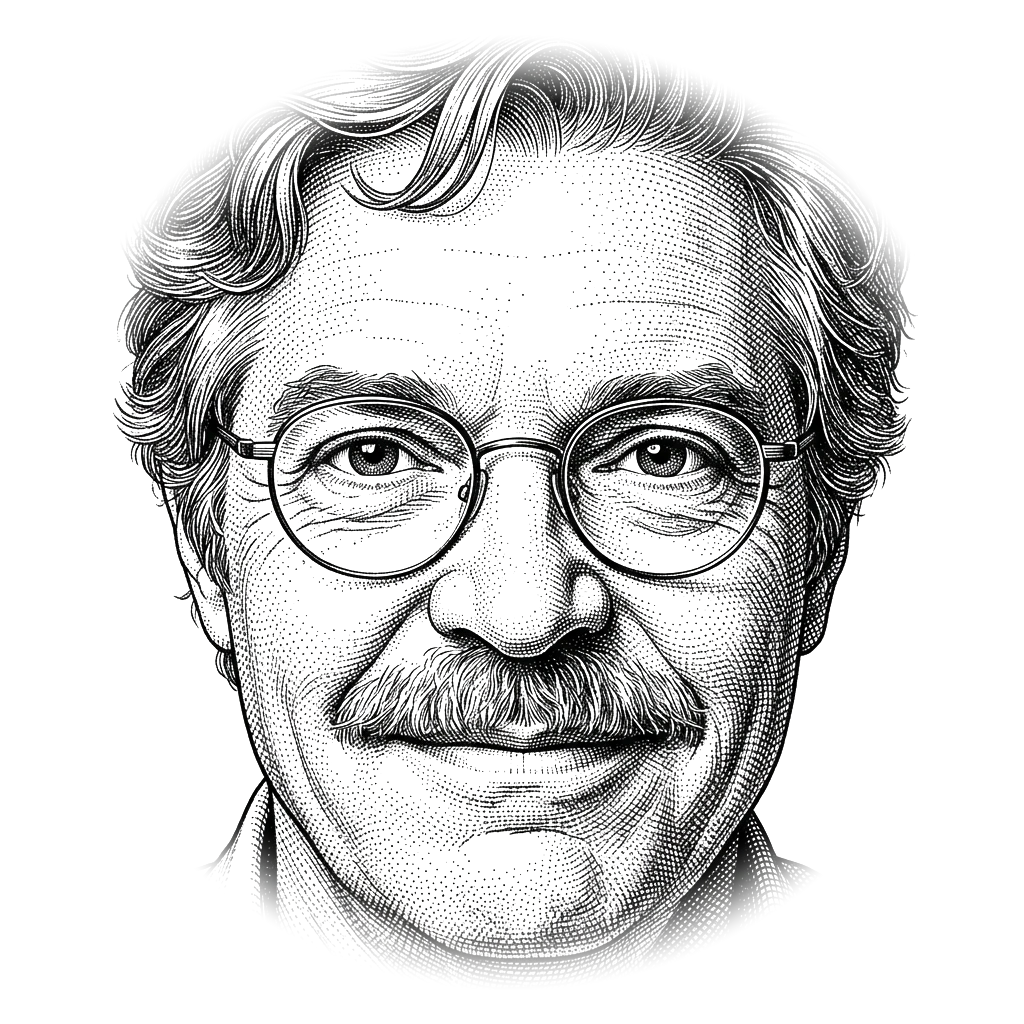
In the autumn of 1966, computing was held captive by an unexamined metaphor: the machine as an automated clerical pipeline.
At its physical foundation lay the von Neumann architecture, an arrangement wherein an omniscient central processing unit mechanically indexed, extracted, and overwrote passive data residing in contiguous, sequentially addressed memory words. At its theoretical summit lay the procedural dogma best distilled by Niklaus Wirth: Algorithms + Data Structures = Programs.
This formulation presumed an ontological partition. Data was conceived as inert matter—an unresisting block of bytes shaped by record layouts, array bounds, and pointer offsets. Algorithms were the active, external instruments that acted upon this matter. To execute computation was to dispatch a centralized routine that sliced directly into the exposed anatomy of a data structure, inspected its interior fields, altered its bit patterns, and returned.
The structural consequence of this division was catastrophic fragility. In FORTRAN, COBOL, and later in C, the internal topology of every aggregate record was necessarily exposed to every routine tasked with its manipulation. If an engineer altered the byte offset of a record field, changed an integer from sixteen to thirty-two bits, or substituted a contiguous array for a linked list, that mutation radiated outward through the entire codebase. Every dependent subroutine required manual recompilation and surgical revision.
As software artifacts expanded from thousands to millions of instructions, the surface area of these implicit spatial contracts exploded combinatorially. Programs did not merely bend under their own weight; they suffered from systemic sclerosis.
At the level of human agency, this physical brittleness induced an even deeper epistemic blindspot. The digital computer was treated by corporate accounting departments, military agencies, and university computer centers alike as an exotic numerical engine—a high-density batch calculator designed to maximize the utilization of expensive vacuum tubes and core memories. Machine cycles were precious; human cognitive cycles were expendable.
Practitioners failed to recognize that exposing internal memory structures placed an absolute thermodynamic ceiling on systemic scale, and they were blind to an even larger historical truth: that the digital computer was not merely a faster slide rule or an automated printing press, but a qualitative rupture in the history of externalized thought. The establishment saw an optimization engine for institutional paperwork; they were blind to the embryonic emergence of an expressive meta-medium.
Alan Kay arrived at the University of Utah in 1966 not from the orthodoxy of mechanical engineering or corporate data processing, but from the cross-currents of molecular biology, mathematics, professional jazz piano, and theatrical production. That disparate intellectual pedigree proved decisive.
Shortly after his arrival in Salt Lake City, Kay was handed two artifacts that fractured his inherited understanding of software. The first was a stack of architectural schematics for the Burroughs B5000, an idiosyncratic mainframe designed by Robert Barton. Unlike standard von Neumann machines, which exposed raw memory addresses to arbitrary manipulation, the B5000 possessed no machine language in the conventional sense. It was designed to run high-level Algol directly, organizing its physical core memory through capability-based descriptors that enforced hardware protection boundaries around memory segments.
The second artifact was a magnetic tape containing an early version of Simula 67, developed at the Norwegian Computing Center by Ole-Johan Dahl and Kristen Nygaard. Dahl and Nygaard had sought a language to model complex physical scenarios—such as the queuing dynamics of ships arriving in a harbor—and had invented an abstraction called the "class," allowing programmers to bundle subroutines and local variables into discrete computational agents.
Kay examined these two systems through the perceptual lens of a cellular biologist. In biological morphogenesis, trillions of cells coordinate to construct an organism of unfathomable complexity without any centralized, omniscient controller dictating their simultaneous states. A liver cell does not reach into the interior of an adjacent pancreatic cell to rearrange its organelles, alter its enzymatic concentrations, or rewrite its DNA. The interior of the cell is protected by a lipid bilayer membrane: an impermeable ontological boundary.
Communication between living cells occurs never through physical expropriation of internal parts, but exclusively through surface-receptor messaging. A hormone or neurotransmitter is released into the interstitial fluid; the target cell encounters the signal on its outer membrane and retains total internal autonomy over how, or even whether, to respond. The system scales to macroscopic complexity precisely because the boundary of the cell is never breached.
In a sudden flash of analogical synthesis, Kay realized that the procedural model of computing was inverted. If Moore’s Law held—if the rapid miniaturization of integrated circuitry meant that an entire room-sized computer could eventually be condensed down to a single square millimeter of silicon—then software should not be written as static procedures acting upon vulnerable blocks of memory.
Software should be grown out of millions of completely autonomous, virtual whole computers.
Kay called this radical inversion "Object-Oriented Programming," though he would spend the next half-century lamenting the nomenclature: "I'm sorry that I coined the term 'objects' for this topic long ago," he later remarked, "because it gets many people to focus on the lesser idea. The big idea is 'messaging'."
In Kay's biological ontology, the computational universe was reconstructed around three non-negotiable principles:
First, the complete annihilation of exposed data. An object is not a C-style record with function pointers attached to its periphery. It is an independent computational entity whose internal state is hermetically sealed within an impenetrable logical membrane. External observers can see only the surface protocol of what the entity claims to understand.
Second, communication through late-bound messages rather than procedural address jumps. When an entity wishes another to act, it does not invoke a function by jumping to an absolute memory address. It dispatches a symbolic intent—a message. The receiving entity receives this intent and evaluates it dynamically within its own local context. The caller does not know, and is strictly forbidden from caring, how the receiver satisfies the request.
Third, extreme late-binding and recursive self-similarity. If a computational entity is truly a complete virtual computer, then the parts must possess the same operational power as the whole. A language must not distinguish between primitive data types provided by the hardware and compound structures authored by the human mind. An integer, a character, an operating system window, a sound wave, an Ethernet packet, and a floating-point matrix must all be first-class citizens obeying the identical protocol: everything is an entity, and computation consists entirely of entities exchanging messages.
This was not a cosmetic syntax for structuring routines; it was a profound shift in epistemic architecture. By replacing the brittle spatial coupling of procedural calls with the loose, communicative coupling of messaging, systems could be modified, refactored, and scaled dynamically without collapsing the whole. A system could inspect its own running substrate, alter its own definitions while executing, and adapt without rebooting.
Yet for Kay, this biological architecture of software was only half the equation. The virtual cell was the engine; the vehicle was the human mind.
In the late 1960s, while visiting Seymour Papert at MIT’s Artificial Intelligence Laboratory, Kay watched elementary school children writing programs in Logo to control a mechanical turtle and manipulate geometric angles. He saw ten-year-old children operating in what the Swiss developmental psychologist Jean Piaget called the stage of formal operational thought—reasoning about abstract models and governing rules—years before conventional pedagogical theory declared it possible.
Kay recognized that the digital computer was not a tool in the historical lineage of the shovel, the hammer, or the printing press. It was what Marshall McLuhan called an extension of human faculty, but with a terrifying and liberating distinction: it was the first active medium in human history.
Print externalized thought into frozen symbols on passive paper. The computer externalized thought into dynamic, executable models that talked back. It allowed human beings not merely to read arguments, but to construct miniature working universes, inhabit them, perturb their parameters, and observe the emergent consequences.
Synthesizing Piaget’s developmental theories with Jerome Bruner’s model of human cognition—which demonstrated that human learning moves dynamically across three interconnected mentalities: the enactive (knowing through tactile action and muscle memory), the iconic (knowing through visual imagery and spatial patterns), and the symbolic (knowing through abstract formal notation)—Kay conceived the Dynabook in 1968.
He sketched the device on a yellow legal pad: a thin, battery-powered personal notebook weighing less than two pounds, equipped with a flat-panel display, a keyboard, and wireless networking, priced within reach of a schoolchild. The Dynabook was not intended as an electronic textbook to deliver static institutional curricula. It was designed as an intellectual sketchbook—a dynamic personal medium that children and adults could use to simulate planetary orbits, animate cartoon physics, compose multi-voice counterpoint, and explore mathematical structures through immediate, tactile interaction.
In 1971, when Xerox established the Palo Alto Research Center (PARC) in the foothills of Stanford University, Robert Taylor recruited Alan Kay to found the Learning Research Group (LRG).
At PARC, across nine incandescent years, Kay and his collaborators—chief among them Dan Ingalls, Adele Goldberg, Ted Kaehler, Diana Merry, and Larry Tesler—set out to manufacture the Dynabook into physical existence. Because the microprocessors and flat displays of the 1980s did not yet exist, they built the future by brute-force simulation on the Xerox Alto: a microcoded minicomputer engineered by Chuck Thacker and Butler Lampson.
To bring the cellular philosophy to life on the Alto, Kay and Ingalls created Smalltalk.
Smalltalk was not merely a programming language; it was an integrated digital reality. Written entirely in itself, from its lowest microcode primitives to its highest windowing interfaces, Smalltalk realized Kay's dream of recursive self-similarity. There was no operating system beneath Smalltalk; Smalltalk was the operating system. There was no separate compiler, no static linker, no memory debugger, and no command-line prompt. The user lived inside a persistent, living graphic ecology where every visual element on the screen was an inspectable, live object.
To bridge Bruner’s enactive and iconic modes of thinking, Kay’s group invented the modern graphical user interface: - They replaced the scrolling green teletype terminal with a bitmapped raster display, where every individual pixel was mapped directly to a bit in memory, allowing arbitrary typography, mathematics, and imagery to share the same surface. - They integrated Douglas Engelbart’s mouse to engage the physical hand, creating the illusion of direct spatial manipulation. - They invented overlapping windows to allow the human working memory to maintain multiple contexts simultaneously without losing spatial orientation. - They formalized the Model-View-Controller (MVC) pattern, structurally severing an object's internal theoretical logic (the Model) from its visual spatial representation (the View) and its user input handling (the Controller).
When Steve Jobs visited Xerox PARC in December 1979, the demonstration that stunned him into silence was not the Alto hardware or the Ethernet networking. It was Smalltalk. Jobs looked at the screen and saw an intuitive graphical desktop.
He did not see that the desktop was merely the visible skin of a profound biological revolution in the nature of human thought.
The commercial history that followed was a tragedy of partial adoption.
In the 1980s and 1990s, the computing industry eagerly ingested the superficial artifacts of Xerox PARC: the mouse, the overlapping windows, the desktop metaphor, the graphical menus. Later, commercial software engineering embraced the vocabulary of "object-oriented programming" through languages like C++, Java, and C#.
Yet in almost every instance, the radical core of Kay’s insight was eviscerated.
Commercial languages abandoned biological messaging and dynamic late-binding in favor of static, early-bound vtables, re-imposing rigid compile-time types that welded callers directly back to the physical memory offsets of class hierarchies. They took the term "object-oriented" and applied it retroactively to the very procedural record-carving architecture Kay had sought to dismantle.
Meanwhile, personal computing devolved from an expressive, personal meta-medium into a closed consumption appliance. The dynamic, user-reconfigurable medium envisioned in the Dynabook—where every child was empowered to reprogram their environment as effortlessly as writing a sentence—was replaced by locked app stores, sandboxed operating systems, and passive streaming consumption. Computing became an instrument for displaying television, conducting corporate surveillance, and optimizing e-commerce transactions.
Yet Alan Kay’s architecture of the medium remains the most radical unrealized vision in the history of science.
He saw that the computer’s ultimate destination is not to automate our existing clerical habits, but to rewire human intellectual capacity: to serve as a prosthetic for the imagination that makes the abstract visible, the dynamic tactile, and the complex intelligible. The machine is not an engine of calculation; it is an instrument of qualitative literacy. We have spent half a century optimizing the appliance, while the true medium still waits to be born.
“The best way to predict the future is to invent it.”
“Simple things should be simple, complex things should be possible.”
“People who are really serious about software should make their own hardware.”
“OOP to me means only messaging, local retention and protection and hiding of state-process, and extreme late-binding of all things.”
“Technology is anything that wasn’t around when you were born.”
- The Reactive Engine (Ph.D. Dissertation) 1969
- A Personal Computer for Children of All Ages (Dynabook) 1972
- Personal Dynamic Media (with Adele Goldberg) 1977
- The Early History of Smalltalk 1993
- The Computer Revolution Hasn't Happened Yet 1997