Isaac Luria
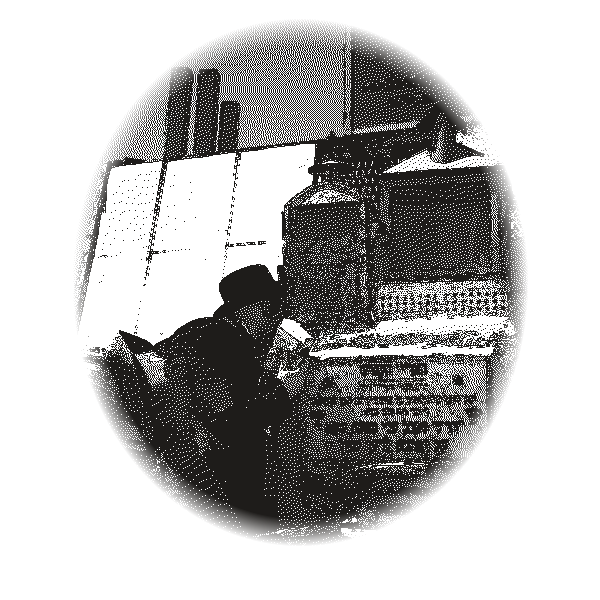
In the high, sun-bleached hill town of Safed in Upper Galilee, during the brief span of two years between 1570 and 1572, an impoverished thirty-six-year-old spice merchant and scholar remade the mystical architecture of Judaism. Isaac ben Solomon Luria, known to his disciples as the Ari—the Lion (Ashkenazi Rabbi Isaac)—wrote virtually nothing with his own hand. He paced the pine-scented ravines overlooking the Sea of Galilee, walked among the ancient graves of Talmudic sages, and spoke in hushed, intimate tones to a tightly bound circle of adepts. Yet the mythic cosmology that poured from his lips—recorded furiously on scraps of paper by his foremost disciple, Hayyim Vital—would sweep across the Jewish world like wildfire, transforming prayer, liturgy, and the historical understanding of exile from North Africa and the Ottoman Empire to Poland and the Low Countries.
Luria was born in Jerusalem in 1534 to an Ashkenazi father and a Sephardic mother. Following the early death of his father, he was sent to Cairo to be raised by a wealthy maternal uncle, studying rabbinic law under the eminent halakhists David ben Solomon ibn Abi Zimra (the Radbaz) and Bezalel Ashkenazi. But Cairo's commercial bustle could not hold him. For seven years, Luria retreated to a secluded cottage on the island of Jazirat al-Rawda on the Nile, belonging to his father-in-law. There, in radical solitude, surrounded by the reed beds of the river, he spent his days meditating on the Zohar, emerging only for the Sabbath, and speaking only in whispered Hebrew. In that long Nile incubation, Luria's visionary faculties caught fire, attuning his perception to the transmigration of souls, the breathing of angels, and the cosmic wounds hidden beneath the surface of the Torah.
The existential urgency of the Lurianic vision was born directly out of the catastrophic trauma of 1492: the expulsion of the entire Jewish civilization from the Iberian Peninsula. For generations, Jewish thought had struggled to comprehend why the people of the covenant were condemned to endless wanderings, pogroms, and displacement. Classical medieval philosophy had offered dry, rationalist consoles; the Zohar had mapped the harmonious emanation of the ten divine attributes (Sefirot). But Luria offered an audacious, staggering metaphysical reversal: exile was not an accidental historical misfortune inflicted upon Israel; exile was the primordial condition of God Himself. Long before humanity was created, before the world came into being, the Divine had undergone an infinite, catastrophic rupture.
Luria began his cosmic drama with the concept of Tzimtzum—divine contraction. If the Infinite (Ein Sof) filled all reality, leaving no room for finite existence to arise, how could a universe come to be? In Luria's revolutionary telling, God's first act of creation was not an outward expansion, but an inward retreat: the Infinite contracted into Itself, withdrawing from a central point to create a metaphysical vacuum (tehiru), a primordial void within which finite worlds could unfold. Creation began not with an assertion of power, but with an act of divine humility and self-limitation. Into this newly opened clearing, the Infinite radiated a single beam of divine light (kav), intended to fill the vessels (kelim) that were to structure reality.
Then came the catastrophe: Shevirat ha-Kelim—the Shattering of the Vessels. The lower vessels of the Sefirot, fragile and unequipped to contain the searing intensity of the divine light, cracked, burst, and collapsed under the ontological shock. Holy sparks of divine light (nitzotzot) plunged downward into the abyss, becoming trapped inside shards of broken vessel that turned into gross, opaque shells (kelipot)—the origin of material darkness, chaos, and evil. As a consequence of this cosmic accident, nothing in the universe is in its right place. The divine realm itself is wounded and fractured: the Divine Presence (Shekhinah) was hurled into wandering exile, severed from the transcendent Holy One. The world we inhabit is not a finished masterpiece, but a shattered mosaic of divine debris.
From this tragic diagnosis emerged Luria's sublime imperative: Tikkun Olam—the Repair of the World. Unlike classical theologies where salvation is exclusively a unilateral act of divine sovereignty, Luria placed the responsibility for cosmic redemption squarely upon the shoulders of human beings. Every human soul, through intentional contemplation (kavvanah), moral righteousness, and the performance of sacred commandments (mitzvot), possesses the precise spiritual lever needed to liberate the trapped sparks from their shells and restore them to the divine source. Eating a meal with sacred gratitude, offering a blessing with concentrated heart, speaking words of truth, or comforting a mourner extracts a spark from the mud of chaos and lifts it back to eternity.
In the cemetery of Safed, Luria conducted past-life readings for his disciples, claiming to read the transmigrations of their souls (gilgul) written across their foreheads and inscribed in the call of birds. He taught that every soul wandering through history is a spark of the primordial Adam, incarnating repeatedly through generations until its specific cosmic repair is accomplished. His disciple Hayyim Vital noted that the Ari never struck a living creature, not even a fly, and walked with his eyes cast down so as not to crush the tiniest ant, seeing in all creatures the latent sparks of divine presence waiting to be redeemed.
Safed was a crucible of ecstatic asceticism. On Friday afternoons, Luria and his circle would dress in white linen and walk out into the open fields among the hills of Galilee to greet the Sabbath Queen, chanting the bridal hymns that gave birth to Lekha Dodi. In those sun-drenched fields, the boundary between heaven and earth dissolved; they were not merely observing a weekly Sabbath, but enacting the temporary reunification of the exiled Shekhinah with her divine Beloved, prefiguring the final cosmic Sabbath when all broken vessels will be healed.
In the summer of 1572, an epidemic struck Safed. Luria was stricken with fever and died on the twenty-fifth of July, at the age of thirty-eight. Before his death, Vital pleaded with him: "Will you leave us without the master who can guide our souls?" Luria replied that had his disciples been worthy of complete unity of heart, he would have remained among them, but that the time of full revelation had not yet arrived. He was buried in the ancient cemetery of Safed, looking out over the valley toward the tomb of Rabbi Shimon bar Yochai on Mount Meron.
The Lurianic Kabbalah reshaped the soul of Judaism. It democratized mysticism, transforming every mundane human action into an act of cosmic significance. In the eighteenth century, the Baal Shem Tov absorbed the Lurianic vision of divine sparks hidden in all material things to found the Hasidic movement, infusing everyday labor and ecstatic joy with mystical purpose. In the modern era, the concept of Tikkun Olam broke through theological boundaries to become a universal ethical call to heal the social, political, and ecological brokenness of our planet. Luria gave humanity the profound dignity of being God's necessary partner in the restoration of a fragmented universe.
“There is no sphere of existence, including the deepest realm of evil, that does not contain holy sparks.”
“Before creation, the Infinite Light filled all existence; to make room for finite beings, God contracted Himself.”
“Know that every single human soul is a limb of the primordial Adam, sent into the world to repair its portion.”
“A person who destroys a single living creature needlessly damages the garment of the Divine Presence.”
“Prayer without deep contemplation of the heart is like a body without a soul.”
- Etz Hayyim (The Tree of Life) c. 1573 (pub. 1782)
- Sha'ar Ha-Gilgulim (The Gate of Reincarnations) c. 1573
- Sha'ar Ha-Kavvanot (The Gate of Intentions) c. 1573
- Piyyutim for the Sabbath c. 1570
- Sefer Ha-Derushim c. 1572