Emmy Noether
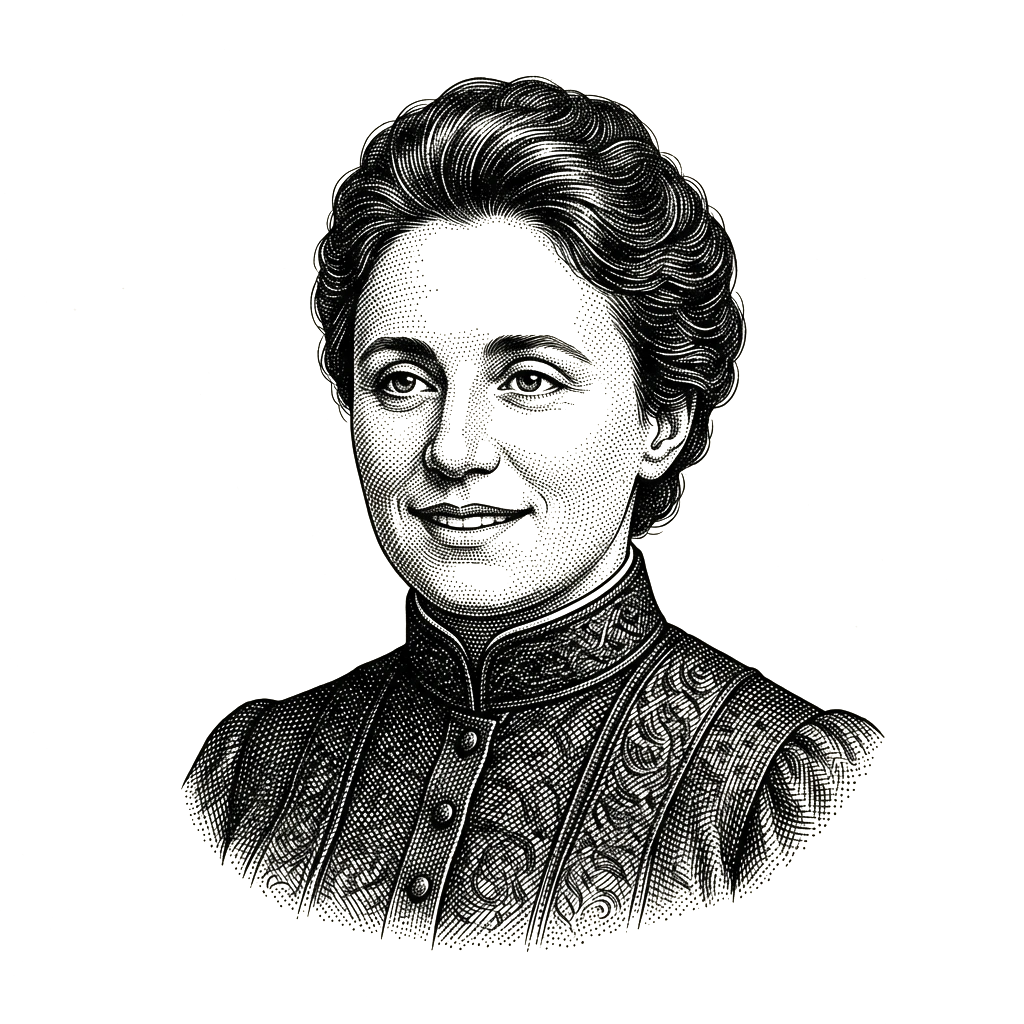
In the autumn of 1915, the intellectual capital of European mathematics faced a quiet, destabilizing crisis. In Göttingen, David Hilbert and Felix Klein were dissecting Albert Einstein’s emerging General Theory of Relativity. The equations were magnificent, but they harbored a mathematical scandal: in curved spacetime, the classical conservation of energy appeared to disintegrate.
For three centuries, physics had treated energy as an inviolable balance. Yet under Einstein’s field equations, gravitation could not be assigned a true tensor energy-momentum density. When calculated across curved spacetime, the local energy divergence vanished not as an invariant physical law, but as a coordinate artifact. Einstein was troubled; Hilbert and Klein were stalled. Where did the energy go?
Unable to resolve the paradox, Hilbert and Klein summoned the foremost invariant theorist in Germany: thirty-three-year-old Emmy Noether.
Noether arrived in Göttingen without a faculty post, barred by Prussian statutes forbidding women from academic chairs. She lectured under Hilbert’s name, unpaid and unlisted. Yet where the titan Hilbert saw an analytical morass of gravitational components, Noether saw something far deeper: a fundamental misunderstanding of the geometric nature of conservation itself.
In 1918, Noether published her landmark memoir, "Invariante Variationsprobleme". Contained within its pages was what physics now reveres as Noether’s Theorem—the most elegant bridge ever constructed between geometry and physical reality.
Before Emmy Noether, physical laws and conservation principles were treated as separate, empirical discoveries. Newton and Galileo observed that momentum was conserved in collisions; Joule, Mayer, and Helmholtz measured heat and work to assert that energy was conserved. These were cataloged as brute facts of the cosmos—unexplained rules of nature.
Noether shattered this empirical ad-hocism. Her Core Act of Seeing was the discovery that conservation laws are not arbitrary edicts; they are the mathematical consequences of continuous geometric symmetries.
Working within the calculus of variations and the principle of least action, Noether proved that whenever an action functional remains invariant under a smooth continuous transformation group, there exists a corresponding divergence-free current—and with it, an exact, immutable conserved quantity:
- Invariance under continuous translation in time implies physical laws do not care whether an experiment occurs today, tomorrow, or a billion years ago. From this single temporal symmetry, the conservation of energy emerges mathematically.
- Invariance under continuous translation in space implies physical laws are identical in Göttingen, on the lunar surface, or in the Andromeda galaxy. From spatial homogeneity, the conservation of linear momentum emerges mathematically.
- Invariance under continuous spatial rotation implies nature possesses no preferred direction in space. From spatial isotropy, the conservation of angular momentum emerges mathematically.
With one stroke of variational analysis, Noether proved that conservation is simply the physical shadow cast by geometric symmetry. If a symmetry holds, its conservation law is immutable. If the symmetry is broken, the conservation law must fail.
This insight dissolved the Göttingen crisis of General Relativity. Noether proved not one, but two profound theorems.
Her First Theorem applied to finite-dimensional Lie groups—rigid, global transformations where coordinate shifts are uniform across space and time. Here, symmetries yield genuine dynamical conservation laws with invariant scalar charges.
Her Second Theorem addressed infinite-dimensional Lie groups—local transformations where coordinates can be warped independently at every point in spacetime by arbitrary smooth functions. This is precisely the gauge symmetry of General Relativity: general covariance under arbitrary diffeomorphisms.
Noether proved that under local gauge groups, variational equations do not yield independent dynamical conservation laws. Instead, they yield off-shell differential identities—geometric relationships that hold identically regardless of the equations of motion. In General Relativity, the apparent failure of local energy conservation was not a defect of physics; it was the inevitable mathematical signature of coordinate independence. The vanishing covariant divergence was identical to the contracted Bianchi identity: $\nabla_\mu G^{\mu\nu} \equiv 0$. The crisis was not a loss of energy, but the discovery of gauge geometry.
Noether’s theorem inverted the entire method of theoretical physics.
Throughout the nineteenth century, physicists observed mechanical forces—gravitational attraction, magnetic deflection, friction—and constructed dynamical equations. In the twentieth and twenty-first centuries, physicists reversed the arrow of discovery: they postulated a symmetry group, wrote down the most general action invariant under that symmetry, and discovered that the fundamental interactions—electromagnetism, the weak force, the strong nuclear force—are mathematically compelled into existence as gauge connections. The Standard Model of particle physics, quantum electrodynamics, and Yang-Mills theories are all direct intellectual progeny of Noether’s variational architecture.
Yet Noether’s vision was too vast to remain confined to physics. In the 1920s, she executed an equally profound revolution in pure mathematics: the birth of Abstract Algebra.
At the turn of the century, algebra was dominated by computational brute force—colossal polynomial expansions pioneered by Paul Gordan. Noether discarded the calculations, insisting that mathematics must be governed by conceptual, axiomatic structures. In her foundational 1921 paper, "Idealtheorie in Ringbereichen", she introduced the ascending chain condition (ACC) for ideals: the requirement that every strictly ascending chain of sub-ideals must eventually terminate.
From this topological finiteness condition arose the modern theory of Noetherian rings and modules. She proved the Lasker-Noether theorem, demonstrating that every ideal in a Noetherian ring can be decomposed uniquely into an intersection of primary ideals—generalizing the prime factorization of arithmetic across modern algebraic geometry. When she examined topology, she recognized that combinatorial Betti numbers were merely shadows of algebraic invariant structures, redirecting topology into the modern study of homology groups.
When David Hilbert fought the Göttingen academic senate to secure her habilitation, protesting that "we are a university, not a bathhouse," the faculty refused. Noether was indifferent to the slight. She organized voluntary seminars in her private apartment and on long walks through the countryside, gathering brilliant young minds—B. L. van der Waerden, Emil Artin, Wolfgang Krull—who proudly called themselves "the Noether boys."
When the National Socialist regime seized power in 1933 and revoked her right to teach, Noether greeted the exile with equanimity. Welcoming students into her living room to continue their research until her departure for Bryn Mawr College and the Institute for Advanced Study in Princeton, she remained devoted solely to mathematical truth.
Emmy Noether taught humanity to look through the turbulence of physical phenomena and discern the motionless symmetries that govern reality. In physics, she proved that what is conserved is what is invariant. In algebra, she proved that what is true is what is structural. By establishing symmetry as the foundational grammar of nature, she constructed the bedrock upon which modern science stands.
“If one proves the equality of two numbers a and b by showing first that a <= b and then a >= b, it is only fair to say that one hasn't proved anything.”
“My methods are really methods of working and thinking; this is why they have crept in everywhere anonymously.”
“Pure mathematics is, in its way, the poetry of logical ideas.”
- Invariante Variationsprobleme (Noether's Theorem) 1918
- Idealtheorie in Ringbereichen (Foundations of Modern Commutative Algebra) 1921
- Abstrakter Aufbau der Idealtheorie in algebraischen Zahl- und Funktionenkörpern 1927
- Nichtkommutative Algebren (Non-commutative Algebras) 1933