Tim Berners-Lee
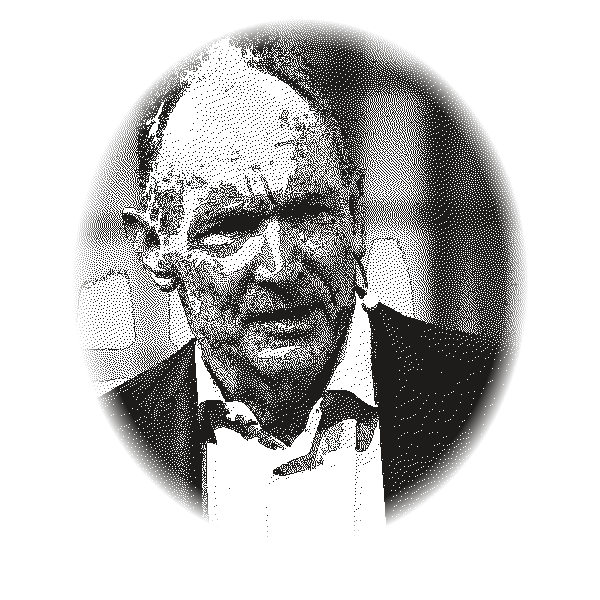
In the late 1980s, the European Organization for Nuclear Research (CERN) was an archipelago of incompatible information. Straddling the French-Swiss border outside Geneva, thousands of visiting physicists, engineers, and technicians were collaborating on the colossal experiments that would culminate in the Large Hadron Collider. They produced millions of technical documents, software manuals, equipment schematics, and experimental datasets. The physical cables of the Internet were already in place: routers hummed, and packets shuttled reliably over TCP/IP. Yet information remained paralyzed inside proprietary silos. One group stored notes on VAX/VMS mainframes; another kept documentation on Unix workstations; others used Apple Macintoshes or MS-DOS terminals.
To retrieve a piece of information, a researcher had to engage in an exhausting ritual. You had to track down the author, ask what computer held the file, discover what proprietary network protocol was required to reach it, obtain login credentials, memorize esoteric command-line flags, and navigate an idiosyncratic file directory. If an engineer left CERN, their intellectual trail evaporated with them. The network could move raw bytes from one machine to another, but it possessed no unified concept of human knowledge. Documents were tied to the physical geography of specific hard drives, inaccessible unless you already knew where they lived.
In March 1989, an English software consultant at CERN named Timothy Berners-Lee submitted a proposal to his supervisor, Mike Sendall. The document bore a modest, unassuming title: Information Management: A Proposal. On its cover, Sendall scribbled a now-legendary verdict in pencil: "Vague but exciting..."
Berners-Lee had recognized that human memory does not operate like a hierarchical file system. The brain does not organize thoughts into rigid, nested directories labeled by date or departmental authority. It operates by associative juxtaposition. When you think of a physicist, your mind leaps instantly to the experiment they conducted, to the detector component they designed, to the campus cafeteria where you debated their results, and to the paper that contradicted their thesis.
For decades, computer visionaries—most notably Vannevar Bush with his 1945 Memex and Ted Nelson with Project Xanadu—had dreamed of "hypertext," a medium where documents were joined by active associative pathways. But the visionary hypertext systems were crippled by an architectural obsession: two-way symmetric linking. They insisted that whenever document A linked to document B, document B had to possess a reciprocal link to document A. To maintain bidirectional perfection and prevent broken links, these systems required a centralized global database tracking every transaction across the planet. Under the weight of this universal registry, hypertext remained an academic museum piece, unable to scale beyond local clusters.
Berners-Lee executed the foundational heresy: he discarded symmetric links. In his architecture, a link would be strictly unilateral. A document could link to any other resource across the planet without asking permission from the target, without notifying a central authority, and without guaranteeing that the destination would remain alive tomorrow. If a link broke, the system did not collapse; it simply returned an error. By abandoning the requirement of global consistency, Berners-Lee allowed the graph of human knowledge to scale to infinity.
To transform this conceptual web into an operational reality, Berners-Lee constructed an interdependent trinity of minimalist protocols, designed to run invisibly over the raw plumbing of the Internet.
First, he invented the Universal Resource Identifier (URI), later known as the Uniform Resource Locator (URL). A URI was not a file path on a local disk; it was an abstract, global coordinate space. It declared that any conceptual resource—a document, a person, an image, a live sensor feed—could be given a unique, permanent address that decoupled its semantic identity from the physical hardware hosting it.
Second, he designed the Hypertext Transfer Protocol (HTTP). Where existing file-transfer protocols like FTP were heavy, stateful, and transactional, HTTP was stateless and ephemeral. A client opened a connection, made a single, simple request for a resource, received the document, and immediately severed the connection. By refusing to maintain continuous sessions, HTTP stripped servers of state memory, allowing minimal hardware to service millions of concurrent inquiries.
Third, he created the HyperText Markup Language (HTML). Rejecting complex desktop publishing formats like PostScript that dictated the exact placement of every typographic pixel, HTML was structural and forgiving. It marked headers, paragraphs, and anchor tags, allowing the client's screen to format the presentation according to its own local geometry. Crucially, Berners-Lee designed HTML browsers to ignore tags they did not understand. If a document contained syntax errors or novel extensions, the browser did not crash; it rendered whatever it could comprehend. The web was built on a philosophy of tolerance: liberal in what it accepted, and strict in what it emitted.
In the autumn of 1990, using a sleek, black NeXTcube workstation purchased by Sendall, Berners-Lee wrote the world’s first Web server (httpd) and the first Web browser and editor (WorldWideWeb) in two months. In that original program, the browser was also an authoring tool: anyone reading a page could click into it, edit the text, and publish links back into the commons.
Yet the decisive moment in the history of the Web was not technological, but ethical.
By 1992, the Web was competing against rival information protocols, most notably the University of Minnesota’s Gopher. Gopher was polished, widely adopted, and seemed poised to become the default internet retrieval engine. But in early 1993, the University of Minnesota announced that it was exploring licensing fees for commercial uses of Gopher server software.
Berners-Lee recognized the mortal danger. If the web became balkanized into proprietary fiefdoms, or if corporate gatekeepers extracted tolls for browsing, the dream of a universal knowledge medium would die in its crib. He campaigned relentlessly with CERN’s legal administration. On April 30, 1993, CERN issued a historic declaration: the core code of the World Wide Web was placed into the public domain, free of all royalties, copyright restrictions, or licensing claims, forever.
In that single act of renunciation, Berners-Lee relinquished personal wealth that would have rivaled the fortunes of the greatest industrial monopolists in history. He ensured that the Web would belong to no corporation, no nation-state, and no single human being. It was given to humanity as an inviolable public commons.
Today, the World Wide Web is no longer an application running on top of computers; it has become the sensory substrate of human civilization. It coordinates the global economy, stores collective memory, mediates politics, and hosts the daily conversations of billions of people.
In his later decades, founding the World Wide Web Consortium (W3C) and pioneering the Solid project for decentralized data ownership, Berners-Lee has waged a continuous campaign against the forces that seek to enclose the commons he gifted to the world. He has watched with clear-eyed vigilance as centralized corporate platforms, proprietary social media silos, algorithmic surveillance feeds, and state-level firewalls have attempted to rebuild the very walls he tore down in 1989.
Berners-Lee’s enduring lesson is that technology is never merely a matter of silicon, bandwidth, and protocol. An architecture of information is an architecture of power. By choosing unilateral linking over central control, stateless negotiation over bureaucratic memory, and public domain freedom over commercial monopoly, Tim Berners-Lee proved that the greatest technological creation of modern history could be forged not as an instrument of extraction, but as an enduring gift of shared human freedom.
“The Web does not just connect machines, it connects people.”
“Had the technology been proprietary, and in my total control, it would probably not have taken off.”
“The primary design principle of the Web is tolerance: be conservative in what you do, be liberal in what you accept from others.”
“The Web as I envisaged it, we have not seen it yet. The future is still so much bigger than the past.”
“You affect the world by what you browse.”
- Information Management: A Proposal (CERN) 1989
- WorldWideWeb: Proposal for a HyperText Project (with Cailliau) 1990
- WorldWideWeb.app: The First Web Browser/Editor 1990
- CERN Public Domain Declaration of WWW Source Code 1993
- Uniform Resource Identifiers (URI): Generic Syntax (RFC 2396) 1998
- Weaving the Web 1999
- The Semantic Web (Scientific American) 2001