Sigmund Freud
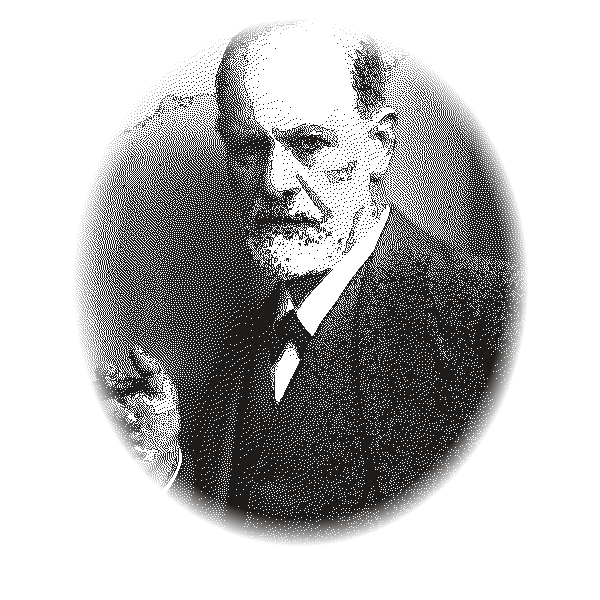
In a dimly lit consulting room at Berggasse 19 in Vienna, surrounded by hundreds of miniature Egyptian, Greek, and Roman antiquities lining the glass cabinets, a bearded physician in a three-piece woolen suit sat quietly behind a plush Persian-carpeted couch. Sigmund Freud was not examining blood slides, testing patellar reflexes, or operating scalpels. He was listening. He had turned the lights down, positioned his chair out of the patient's line of sight, and instructed the recumbent subject to follow one sovereign, inviolable rule: say whatever comes into your mind, without censorship, without moral evaluation, without logical filtering, no matter how trivial, nonsensical, or obscene it might appear.
In that room, psychoanalysis was born. Before Freud, nineteenth-century European psychiatry viewed mental disorders through the rigid lens of somatic neurology: hysteria, melancholia, and obsessions were assumed to be the mechanical consequences of physical lesions in brain tissue, degenerate hereditary nervous systems, or wandering wombs. Freud—who had spent twenty years in the laboratory dissecting lamprey spinal cords and staining nerve fibers with gold chloride—made an audacious conceptual pivot: the symptom was not a mechanical failure of the wire; it was an encrypted message of the psyche.
In 1899, with the publication of Die Traumdeutung (The Interpretation of Dreams), Freud delivered the blow that would permanently dethrone Cartesian rationalism. René Descartes had proclaimed that consciousness is transparent to itself: the mind knows what it thinks. Freud announced that the conscious mind is merely a tiny, sunlit tip of an immense, submerged psychic iceberg. Below the surface churns the Unconscious—a turbulent, volcanic reservoir of repressed sexual drives, primal aggressions, forbidden wishes, and forgotten childhood traumas. The dream is the royal road to the unconscious: not an arbitrary physiological twitch of a sleeping brain, but the disguised fulfillment of a repressed wish, cloaked in the symbolic grammar of condensation and displacement to bypass the vigilant psychic censor.
In 1923, in The Ego and the Id, Freud crystallized this dynamic struggle into his famous tripartite structural model of the psyche. The mind is not a harmonious unity; it is a battleground divided among three conflicting agencies: the Id (das Es), the Ego (das Ich), and the Superego (das Über-Ich). The Id is the primal, biological caldera of instinctual energy, governed entirely by the Pleasure Principle, demanding instantaneous discharge and knowing no morals, no logic, and no passage of time. The Superego is the internalized moral authority of the parents, culture, and society, an unbending tribunal that punishes the psyche with paralyzing guilt.
Poised precariously between these two titans sits the poor Ego: the rational, conscious self governed by the Reality Principle. The Ego must negotiate between the blind, animal demands of the Id, the savage punitive strictures of the Superego, and the stubborn physical constraints of the external world. To prevent itself from being torn apart by overwhelming anxiety, the Ego deploys an intricate defensive arsenal: repression, projection, rationalization, reaction formation, and sublimation—channeling forbidden instinctual drives into scientific inquiry, artistic creation, and cultural monumentality. As Freud famously observed in one of his most devastating aphorisms: 'The ego is not master in its own house.'
In his later years, traumatized by the carnage of the First World War and suffering from agonizing cancer of the jaw that required thirty-three surgeries and a painful prosthetic plate, Freud's vision turned dark and tragic. In Beyond the Pleasure Principle (1920), he looked past the sexual drive (Eros) to postulate Thanatos—the death drive: an innate, unconscious compulsion in all living matter to dissolve tension and return to the inorganic peace of the mineral state. In Civilization and Its Discontents (1930), he declared that human unhappiness is the permanent, structural price paid for civilization. Society demands the renunciation of our deepest animal instincts—our aggression and our sexuality—turning that repressed energy inward upon the self as crushing guilt.
In 1938, as Nazi stormtroopers marched into Vienna during the Anschluss, Freud's books were publicly burned in Berlin ('What progress we are making,' he remarked dryly; 'in the Middle Ages they would have burned me; nowadays they are content with burning my books'). Through the diplomatic intervention of Marie Bonaparte and the American ambassador, the eighty-one-year-old patriarch was allowed to flee with his family to London, leaving behind four elderly sisters who would perish in Nazi concentration camps.
In September 1939, as German panzers smashed into Poland, Freud lay dying in Hampstead, his jaw cancer having eaten through his cheek, releasing a stench so foul that his beloved chow dog cowered in the corner. Reminding his personal physician Max Schur of a solemn promise made months earlier, Freud asked for an end to the agony. Schur administered lethal doses of morphine. Sigmund Freud slipped into a coma and died on September 23, 1939, at the age of eighty-three.
No thinker of modernity has suffered more ferocious scientific attacks. Karl Popper attacked psychoanalysis as an unfalsifiable pseudoscience; contemporary neuroscientists and clinical psychiatrists have replaced the Freudian couch with selective serotonin reuptake inhibitors, cognitive behavioral therapy, and functional MRI scans. Many of his specific physiological doctrines—such as the Oedipus complex as a literal universal biological stage, or penis envy—have been discarded as Victorian cultural artifacts.
Yet Freud's underlying architecture has become the very atmosphere of human consciousness. As W.H. Auden wrote upon his death: 'To us he is no more a person now but a whole climate of opinion under whom we conduct our differing lives.' He taught humanity that we are motivated by forces we do not see, that our slips of the tongue and dreams carry meaning, that childhood trauma echoes into adulthood, and that rational thought is often a fragile rationalization constructed to justify unconscious desires. Sigmund Freud descended into the labyrinth of the human interior and returned with a mirror, forcing humanity to gaze upon its true, divided, and tragic face.
“The ego is not master in its own house.”
“Where id was, there ego shall be.”
“The mind is like an iceberg, it floats with one-seventh of its bulk above water.”
“Unexpressed emotions will never die. They are buried alive and will come forth later in uglier ways.”
“Out of your vulnerabilities will come your strength.”
- Studies on Hysteria (with Josef Breuer) 1895
- The Interpretation of Dreams (Die Traumdeutung) 1899
- The Psychopathology of Everyday Life 1901
- Three Essays on the Theory of Sexuality 1905
- Beyond the Pleasure Principle 1920
- The Ego and the Id (Das Ich und das Es) 1923
- Civilization and Its Discontents 1930