Joseph Schumpeter
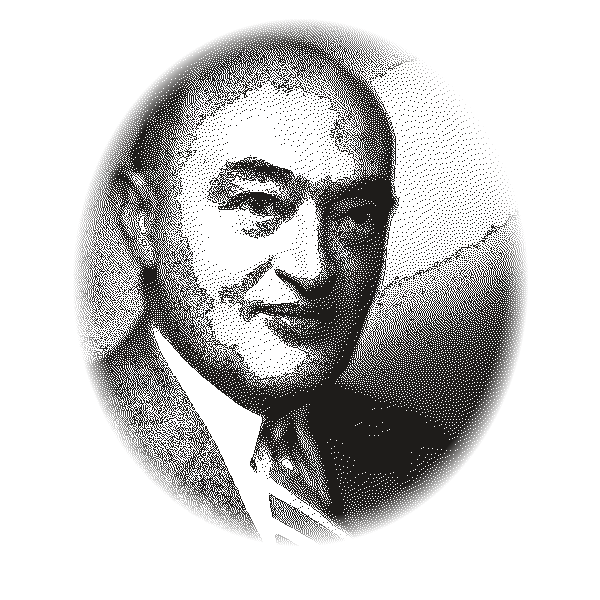
In the smoke-filled lecture halls of Harvard University in the dark winter of 1942, an impeccably tailored Austrian aristocrat in custom leather riding boots sat before his students and smiled with elegant irony. Joseph Alois Schumpeter had once famously announced as a young man in Vienna that he harbored three ambitions in life: to become the greatest economist in the world, the finest horseman in all of Europe, and the most magnificent lover in Vienna—adding, with a sigh, that things were not going well with the horses. Yet beneath his theatrical dandyism and aristocratic manner lay the most ferocious, unsentimental analytical mind in twentieth-century political economy.
While John Maynard Keynes was persuading the Western democracies that the primary problem of capitalism was aggregate demand management—a malfunctioning machine that could be tuned and stabilized by technocratic government spending—Schumpeter looked at capitalism and saw an evolutionary storm. Capitalism was not an engine that reached a tranquil, stationary equilibrium where prices equal marginal costs and supply balances demand, as the neoclassical equations of Léon Walras and Alfred Marshall dogmatically preached. A stationary, circular-flow economy was dead. Capitalism, by its very nature, was a form or method of economic change and not only never was, but never can be stationary.
In his 1942 monument Capitalism, Socialism and Democracy, Schumpeter unveiled the sovereign concept that would define the modern dynamic economy: Creative Destruction. Capitalism survives and grows not through price competition within existing markets, but through the continuous, violent obsolescence of old economic structures from within: 'The opening up of new markets, foreign or domestic, and the organizational development from the craft shop such as U.S. Steel illustrate the same process of industrial mutation—if I may use that biological term—that incessantly revolutionizes the economic structure from within, incessantly destroying the old one, incessantly creating a new one. This process of Creative Destruction is the essential fact about capitalism.'
The competition that truly matters is not whether a shopkeeper sells sugar for a penny less than his neighbor. It is the competition from the new commodity, the new technology, the new source of supply, the new type of organization—competition that strikes not at the margins of the profits of existing firms, but at their foundations and their very lives. The railroad does not compete with the stagecoach; it obliterates the stagecoach. The electric light bulb does not lower the price of kerosene lamps; it renders kerosene lamps obsolete. The microprocessor does not refine the mechanical typewriter; it sends the typewriter to the museum.
The prime mover of this volcanic disruption was not the passive capitalist who supplies money, nor the routine manager who administers an existing factory, but the heroic figure Schumpeter placed at the center of the economic cosmos: the Entrepreneur. The entrepreneur is not an ordinary rational economic man calculating marginal utility; he is a psychological titan driven by the dream to found a private kingdom, the will to conquer, the joy of creating, and the sheer pleasure of exercising energy and ingenuity. The entrepreneur carries out 'new combinations': introducing a new good, introducing a new method of production, opening a new market, conquering a new source of supply of raw materials, or carrying out the new organization of an industry.
Because pioneering is fraught with terrifying technical and commercial uncertainty, the entrepreneur requires extraordinary willpower to swim against the social stream. And when an entrepreneur succeeds, he does not enjoy modest normal profits; he captures temporary monopoly rents. These monopoly profits are not predatory abuses to be crushed by antitrust regulators; they are the vital prizes that induce innovators to take catastrophic risks, and the beacon that attracts a swarm of imitating competitors. The swarm of imitators over-invests, credit expands, the market gluts, the boom turns to bust, and the economic landscape undergoes the cleansing agony of a recession—reallocating capital and labor from failing, obsolete enterprises to dynamic new sectors across long Kondratiev waves of technological transformation.
Yet the most chilling, prophetic movement of Schumpeter's thought was his diagnosis of capitalism's ultimate fate. Can capitalism survive? he asked in 1942. His answer was an uncompromising: 'No. I do not think it can.' But unlike Karl Marx, who predicted that capitalism would collapse from internal economic contradictions, immiseration of the working class, and falling rates of profit, Schumpeter argued that capitalism would be destroyed by its very success.
As industrial corporations grow immense, the individual entrepreneurial function is bureaucratized and automated into corporate committees of routine engineers and managers. Simultaneously, the immense wealth generated by capitalism creates and subsidizes a growing class of alienated intellectuals—academics, journalists, bureaucrats, and critics—who have no direct stake in the brutal realities of production, but possess a vested interest in criticizing the free market. Capitalist society, founded on rational criticism, cannot defend itself against its own ideological critics. Gradually, through democratic legislation, high taxes, regulatory sclerosis, and the welfare state, the heroic entrepreneurial spirit is strangled in red tape, and capitalism dissolves peacefully into a stagnant, bureaucratic state socialism.
Joseph Schumpeter died in his sleep at his country home in Taconic, Connecticut, in January 1950 at the age of sixty-six, with the unfinished manuscript of his monumental History of Economic Analysis open upon his desk.
Today, in the breathless silicon corridors of modern technology and global venture capital, Schumpeter is celebrated as the patron saint of innovation. Every startup pitching disruption, every venture fund searching for asymmetric returns, and every platform rendering legacy industries obsolete speaks the language he codified. He stripped economics of its mathematical complacency, proving that economic progress is not an arithmetic march toward tranquil balance, but a perpetual, heroic tempest of creative destruction that ceaselessly tears down the old to build the miraculous architecture of the new.
“This process of Creative Destruction is the essential fact about capitalism. It is what capitalism consists in and what every capitalist concern has got to live in.”
“The entrepreneur is the pivot on which everything turns.”
“Can capitalism survive? No. I do not think it can.”
“Economic progress, in capitalist society, means turmoil.”
“Pioneering is risky; but imitation without innovation is death.”
- The Theory of Economic Development 1911
- Business Cycles (2 volumes) 1939
- Capitalism, Socialism and Democracy 1942
- History of Economic Analysis 1954 (posthumous)
- Imperialism and Social Classes 1951 (posthumous)