John von Neumann
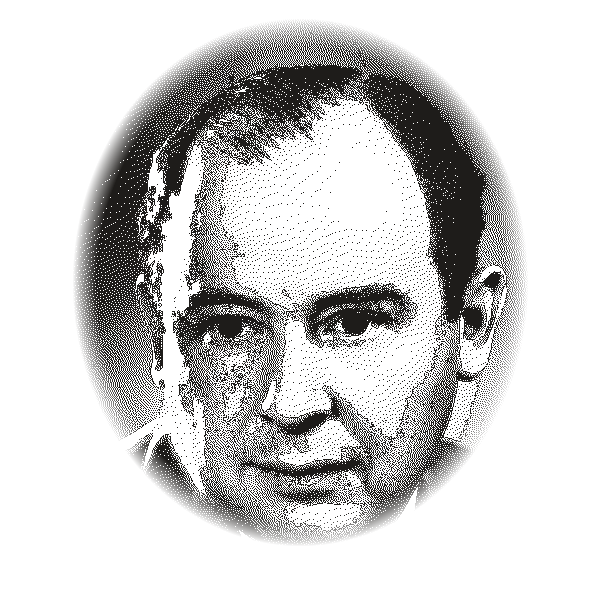
In the spring of 1944, on a railway platform in Aberdeen, Maryland, a chance conversation between two mathematicians shifted the technological vector of the twentieth century. Herman Goldstine, an Army lieutenant supervising computational ballistics for the Manhattan Project, casually mentioned to a round-faced, impeccably dressed civilian that the military was constructing an electronic calculator at the University of Pennsylvania capable of executing three hundred multiplications per second. The civilian was John von Neumann. In an instant, the affable, party-loving Hungarian polymath—whose mental calculations routinely outstripped mechanical desktop adding machines—froze. He demanded every technical detail. Within weeks, von Neumann had inserted himself into the Moore School of Electrical Engineering, staring at the thirty-ton behemoth called ENIAC: eighteen thousand glowing vacuum tubes, thousands of manual switches, and a chaotic tangle of patch cords that required days of physical rewiring every time the ballistic problem changed.
Von Neumann instantly recognized the fatal flaw. ENIAC was fast, but it was intellectually crippled by its architectural rigidity. To reconfigure the machine was to perform electrical surgery upon its body. What was required was not merely faster circuitry, but an entirely new philosophical conception of the machine. In June 1945, writing by hand while traveling by train, he produced a 101-page document titled First Draft of a Report on the EDVAC. In that unassuming typescript, von Neumann decoupled computation from physical rewiring by establishing the stored-program concept: programs and data must reside side by side within the very same electronic memory. An instruction was not a physical wire; it was a numerical word. A machine could read its own instructions, compute new instructions as if they were ordinary numbers, and branch conditionally based on the results of its own internal calculations.
This single conceptual architecture—the CPU containing an arithmetic logic unit and processor registers, a control unit with instruction register and program counter, an external memory bus, and input-output mechanisms—became the foundational blueprint for virtually every digital computer manufactured on Earth for the next eighty years. Yet for von Neumann, computer architecture was merely an afternoon diversion, a practical engineering byproduct of an intellect that moved with terrifying, effortless velocity across the entire spectrum of human knowledge. Born into a wealthy Jewish banking family in Budapest in 1903, he had mastered classical Greek at six, co-authored his first major mathematical paper at nineteen, and established himself as the ultimate mathematical problem-solver of his generation.
In his twenties, while natural philosophers were reeling from the paradoxes of Werner Heisenberg's matrix mechanics and Erwin Schrödinger's wave mechanics, von Neumann stepped into the breach and provided the definitive mathematical foundation of quantum mechanics. In his 1932 magnum opus, Mathematische Grundlagen der Quantenmechanik, he proved that Heisenberg's discrete matrices and Schrödinger's continuous wave functions were mathematically isomorphic representations of operators acting upon an infinite-dimensional, complex Hilbert space. He formalized the projection postulate—the measurement problem—demonstrating with surgical precision how a continuous, deterministic unitary quantum state abruptly collapses into an observable eigenvalue upon interaction with a measuring apparatus.
Not content with mastering the subatomic atom, von Neumann turned his analytical gaze upon the messy, competitive arena of human conflict and economic choice. In collaboration with the economist Oskar Morgenstern, he published the 1944 monument Theory of Games and Economic Behavior. Before von Neumann, economics lacked a rigorous mathematical apparatus for multi-agent strategic interaction, assuming that economic agents functioned either as isolated Robinson Crusoes or within passive atomized markets. Von Neumann formulated the Minimax Theorem for two-person zero-sum games, proving mathematically that in any conflict where one player's gain is exactly another's loss, there exists an optimal mixed strategy that minimizes the maximum possible loss, regardless of what the opponent does.
This was not merely a parlor game calculation; it was the birth of rational strategic analysis. During the early Cold War at the RAND Corporation, von Neumann applied game theory to nuclear deterrence, modeling the standoff between the United States and the Soviet Union with cold, unsentimental precision. He viewed international conflict not as a clash of moral ideals, but as a matrix of payoff vectors governed by mathematical equilibria. When asked about preemptive strikes, his logic was relentlessly uncompromising: if you say why not bomb them tomorrow, I say why not today; if you say today at five o'clock, I say why not one o'clock.
Yet in the final decade of his life, his imagination outstripped even the Cold War defense apparatus to confront the ultimate mystery: the architecture of life and self-replication. If a machine can be built to manufacture a bolt, can a machine be built to manufacture a copy of itself? The intuitive intuition was that self-replication must suffer from thermodynamic entropy: an offspring machine must always be simpler and less complex than its parent. Von Neumann shattered this intuition through his theory of cellular automata. Working with Stanislaw Ulam on a discrete two-dimensional grid of twenty-nine-state cells, he mathematically proved the existence of a universal constructor: an automaton that contains a tape of instructions describing its own structure, reads the tape to build a duplicate machine, and then—crucially—copies the tape itself into the offspring without interpreting it.
In this astonishing theoretical triumph, formulated years before Watson and Crick deciphered the double helix of DNA, von Neumann deduced the exact biological logic of genetic replication. Life solves the entropy problem by treating the genetic tape in two distinct operational modes: first as uninterpreted data to be mechanically copied, and second as executed instructions to build cellular machinery. It was an intellectual feat that bridged mathematics, computation, and biology, revealing the universal logical laws that govern all self-organizing systems.
In 1957, at the age of fifty-three, this peerless biological computer was extinguished by bone cancer, likely contracted from his proximity to nuclear testing at Los Alamos. Confined to a wheelchair in Walter Reed Hospital, guarded by military security lest he babble classified secrets in his delirium, the man who had effortlessly memorized thousands of telephone numbers and recited lines of Thucydides from memory wept as his cognitive powers slipped away.
Yet the world he helped engineer is the world in which modern humanity lives. When we boot a microprocessor, we inhabit the Von Neumann architecture. When we model financial markets, geopolitical negotiations, or auction designs, we use his game-theoretic equilibria. When we simulate biological morphogenesis, artificial life, and self-replicating neural systems, we walk through the cellular grids he conceived on graph paper. John von Neumann was the ultimate computational architect: a mind that saw that behind the staggering complexity of physics, economics, and life lies a single, universal substrate of mathematical logic waiting to be executed.
“If people do not believe that mathematics is simple, it is only because they do not realize how complicated life is.”
“There's no sense in being precise when you don't even know what you're talking about.”
“In mathematics you don't understand things. You just get used to them.”
“Young man, in mathematics you don't understand things; you just get used to them.”
“It is exceptional that one should be able to acquire the understanding of a process without having first acquired the operational control over it.”
- Mathematical Foundations of Quantum Mechanics 1932
- Theory of Games and Economic Behavior (with Oskar Morgenstern) 1944
- First Draft of a Report on the EDVAC 1945
- Continuous Geometry 1960 (posthumous)
- Theory of Self-Reproducing Automata 1966 (posthumous)
- The Computer and the Brain 1958 (posthumous)